
A calm gathering begins with a short list of thoughtful decisions. This hour-by-hour plan helps you prepare the room, the meal, and yourself without spending the day chasing perfection.
Hosting can become stressful when every detail feels equally important. It is easy to spend an hour adjusting flowers, then realize there is nowhere for guests to put their coats. A sound sequence keeps attention on the guest experience.
In the final 24 hours, give your attention to what guests will actually experience: clear information, a comfortable arrival, enough food and drink, a welcoming table, and a host who is present. Most decorative extras can wait.
This plan assumes that invitations have been accepted and the menu has already been chosen. Adapt the timing to your home, your event, and the people attending. A simple supper deserves the same care as a formal dinner, though it may need far fewer steps.
Your 24-hour countdown
Twenty-four hours before: confirm the essentials
Begin with the facts that affect everyone.
- Confirm the guest count.
- Review dietary needs and allergies that guests have shared.
- Check the arrival time, address, building access, and parking notes.
- Confirm that the menu can be served safely and on time.
- Decide where coats, bags, prams, mobility aids, and umbrellas can go.
- Check that the bathroom is stocked with soap, a clean hand towel, and toilet paper.
If the route or entry is confusing, send a brief message now:
“We’re looking forward to seeing you tomorrow at 7:00. Please use the side entrance on King Street. The bell is marked 4B, and your coat can come straight upstairs with you.”
This message is useful, not fussy. Guests feel more relaxed when they know what to expect.
Make a three-column list
Divide the remaining work into:
- Must happen: food safety, seating, guest needs, bathroom, basic tidiness
- Would be lovely: flowers, music, place cards, special garnish
- Can be skipped: anything that will make you resent the evening
The third column protects your energy so you can enjoy the evening with your guests.
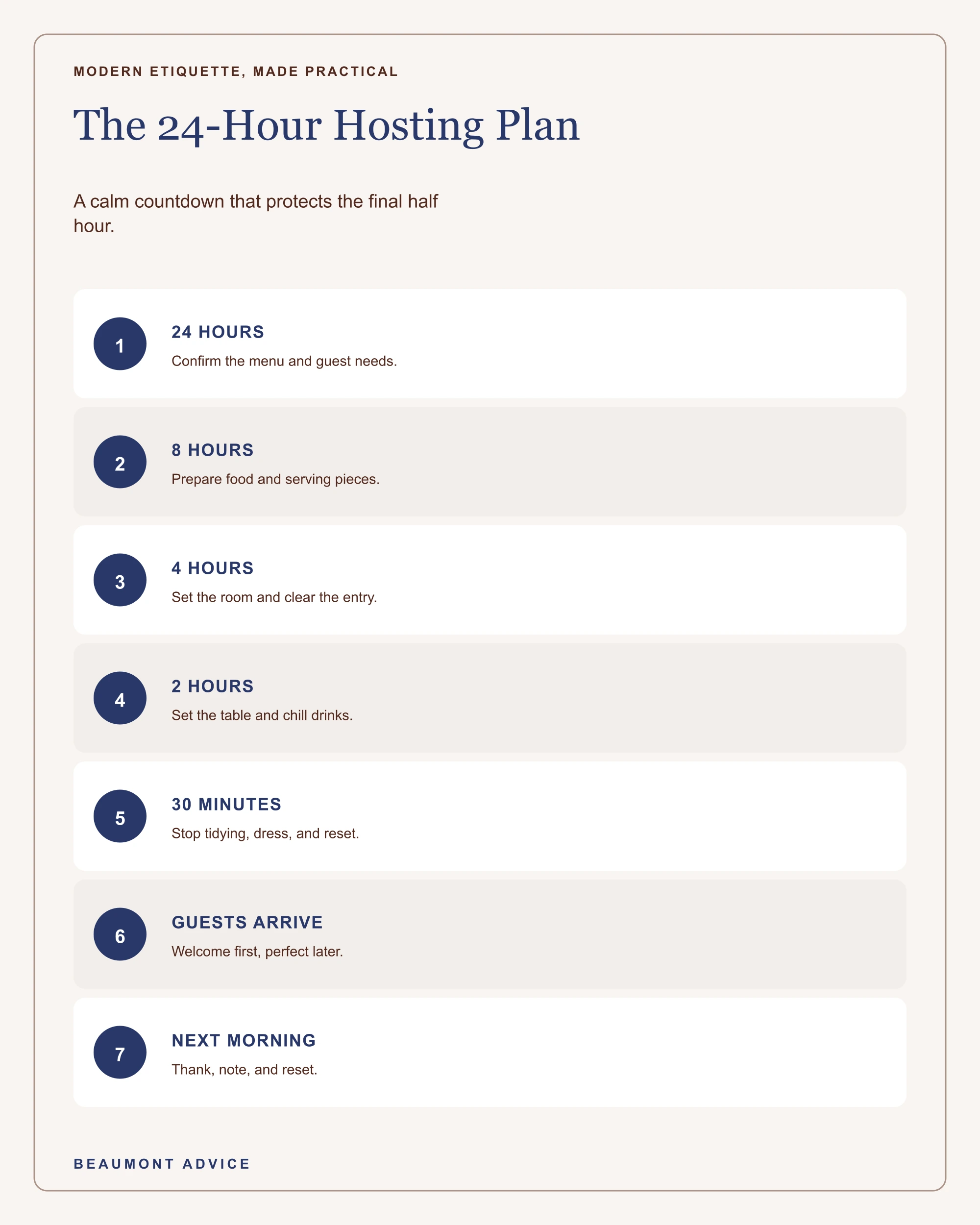
The evening before: prepare the room
Walk through your home as a guest would. Start at the entrance and follow the path to the main room, bathroom, and dining area.
Clear the floor, remove fragile objects from crowded surfaces, and create a visible place for drinks. If someone uses a cane, wheelchair, or other mobility support, check that the route is wide and the seating plan is comfortable. If children are attending, move breakable items and make one small area where they can settle.
Set the table or arrange serving pieces now. Put out:
- Plates, cutlery, glasses, napkins, and serving utensils
- Water jugs or bottles
- Trivets for hot dishes
- A small dish for olive pits, shells, or used cocktail picks if needed
- Extra napkins within easy reach
Keep flowers or candles low enough for guests to see one another. Conversation should never have to compete with the table setting.
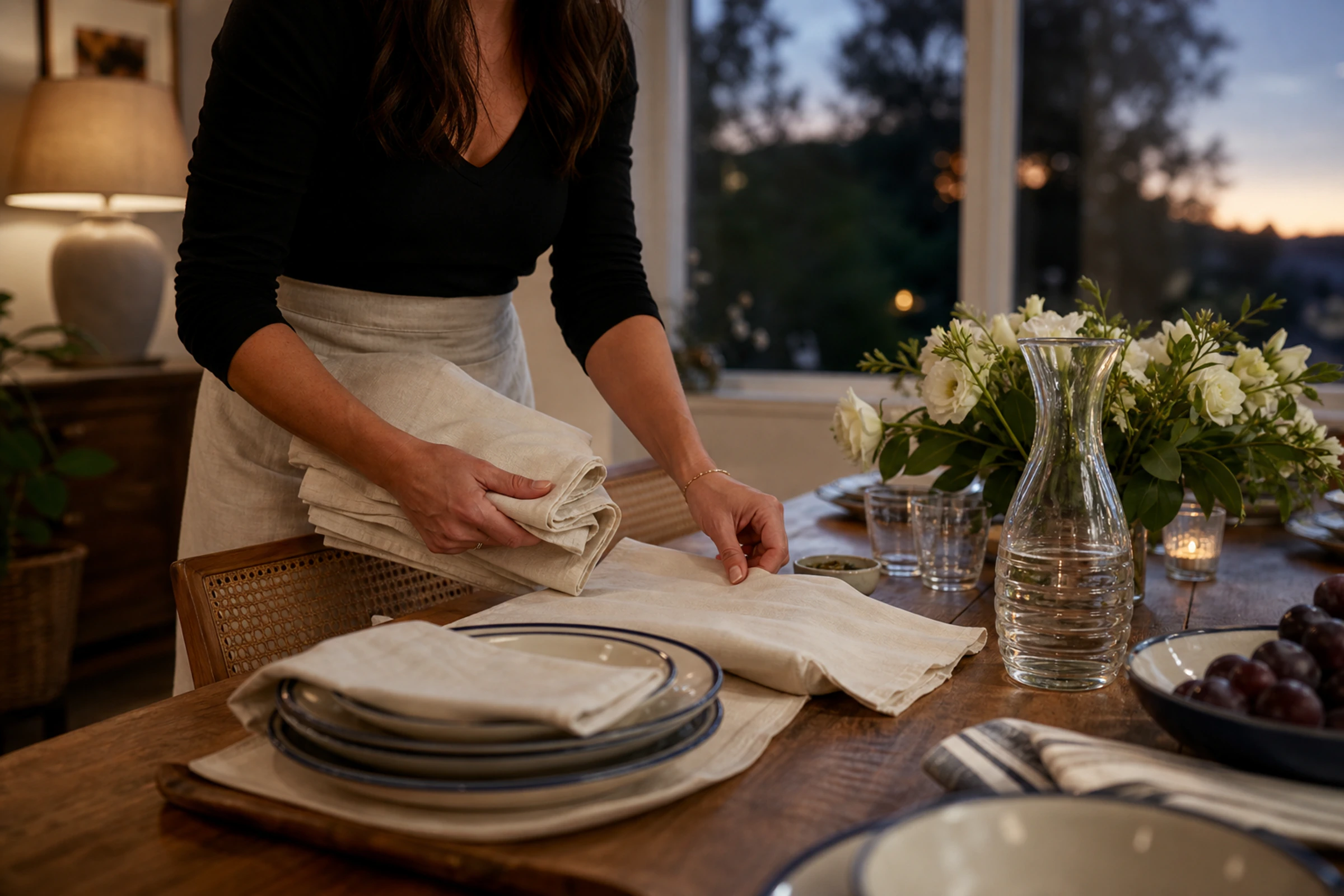
Eight hours before: prepare what can wait safely
Complete the parts of the menu that improve with resting or can be reheated without stress. Chill drinks, prepare garnishes, wash serving bowls, and label anything that another person may need to find.
Create a simple drinks station. Offer water first, then the other choices. You do not need a full bar. Two considered options are often more inviting than a crowded selection.
If a guest is not drinking alcohol, offer the non-alcoholic choice with the same ease and care:
“Would you prefer sparkling water with citrus or the elderflower spritz?”
There is no need to ask why.

Think through the first ten minutes
Those minutes set the mood. Decide:
- Who will answer the door
- Where the first guest will stand or sit
- What drink can be offered at once
- Where introductions will happen
- What you will do if several people arrive together
If you are hosting alone, keep the first drink simple enough to pour while greeting. A complicated cocktail can turn your back on the room just when people need you most.
Four hours before: check comfort
Temperature, lighting, sound, and seating matter more than a perfect floral arrangement.
Set the room slightly cooler than usual if several people will gather. Test the lighting after closing curtains or blinds. Choose music that supports conversation and keep the volume low enough that nobody has to lean across the table to hear.
Count seats, then look at their quality. A guest should not discover that their chair wobbles after sitting down. Mix chairs if needed, placing the firmest, easiest seats where older guests or those with mobility needs can use them without explanation.
Check the bathroom again and place a small waste bin where it is visible. Remove personal medicines or private items. A modest lamp or night-light can help guests find their way without turning on harsh overhead lighting.
Two hours before: finish the table and protect your time
At this point, stop adding jobs. Finish only what is already on the plan.
Review each place setting from the chair. Can the guest reach their water? Is there enough elbow room? Does every item have a purpose? Remove anything that makes the table crowded.
Place serving pieces near the dishes they will hold. Open wine if it needs air, chill what should be cold, and prepare a tray for clearing the first course. Keep a clean cloth and spare napkins nearby for small spills.
Then protect 30 minutes for yourself. Change clothes, drink water, eat a small snack, and sit down for five quiet minutes. A host who has eaten, breathed, and stopped rushing will be better company.
Thirty minutes before: shift from preparation to welcome
The house is now ready enough. Put away cleaning supplies, close doors to rooms guests will not use, and turn on the entry light.
Light candles only where they are stable and safely away from sleeves, flowers, children, and pets. Start the music. Pour yourself water. Check your phone for last-minute messages, then keep it nearby without holding it.
Say the opening lines aloud:
“I’m so glad you’re here. May I take your coat?”
“Come in and make yourself comfortable. You know Sam, and I’d love you to meet Leila.”
Prepared words may sound unnecessary, yet they help when the bell rings before you expect it.
When guests arrive: receive before you serve
Pause what you are doing and greet each person. Eye contact and a warm welcome matter more than keeping a sauce under constant watch for ten extra seconds.
Offer three things in order:
- A place for belongings
- A drink
- A human connection
That connection might be an introduction, a question, or a place in an existing conversation.
“Leila, this is Tom. You both spent time in Lisbon this spring.”
Give enough context for the conversation to begin, then let the guests take it from there.
If someone arrives late, greet them without announcing the delay to the room. If timing has changed, state what is happening:
“We’ve just sat down, and your place is ready. Let me bring you in.”

During the gathering: read the room
A host’s work becomes quieter once the gathering begins. Notice who has not been introduced, whose glass is empty, and whether a guest has been left out of the conversation. You do not need to monitor every bite.
If food runs low, respond simply. Add bread, salad, fruit, cheese, or another easy item. Avoid repeated apologies, which can make guests feel they must reassure you.
If something spills or burns, deal with the practical issue and continue:
“The roast had other plans, so we’re moving straight to the pasta. Please stay seated.”
Guests take their cue from you. Calm recovery gives everyone permission to enjoy the evening.
Make departures easy
As the evening winds down, lower the music slightly and begin offering tea, coffee, or water. Bring coats to an accessible place. If transport is difficult, help guests check a car or route without making anyone explain their plans.
Receive compliments with a simple “Thank you, I’m so glad you came.” Avoid listing everything that went wrong. Let the final memory be the pleasure of the gathering.
The next morning: close the circle
Put away food safely before going to bed, but leave non-urgent cleaning for daylight. A home that held a happy evening may look lived in.
The next day, send a brief message to thank guests for coming. Mention a specific moment:
“Thank you for such a lovely evening. Your story about the train journey had the whole table laughing. I’m so glad you could join us.”
If a guest brought flowers, wine, food, or a host gift, thank them for it directly.
Frequently asked questions
What if a guest asks to bring something?
Give a clear, manageable answer. “Please bring bread from the bakery if it is convenient” is easier than “Anything you like.” If nothing is needed, say, “Just bring yourself.”
Should I ask guests to remove their shoes?
You may, especially when it is customary in your home. Tell guests in advance when possible, offer clean slippers, and make exceptions for anyone who needs supportive footwear.
What if someone arrives early?
Welcome them without showing alarm. Give them a drink and a comfortable place to sit. If they offer help, assign one contained task, such as filling water glasses.
How much should a host clean?
Focus on the spaces guests will use: entrance, bathroom, sitting area, and dining area. Clean and safe matter. A home does not need to look untouched.
The real luxury is attention
Guests remember how a home felt: whether they knew where to go, whether someone welcomed them into the conversation, whether their needs were handled without fuss. A 24-hour plan creates enough order for you to offer that attention freely.
Create a social life you look forward to
Society Savant gives you guided practice in hosting, invitations, conversation, relationships, and intentional social planning. Explore Society Savant.