
The most useful Thanksgiving hosting tips begin before the cooking: tell guests when to arrive and eat, ask about practical needs, and decide what help you would welcome. Those small conversations prevent many of the awkward moments that otherwise arrive at the door.
You do not need to recreate somebody else's holiday. A manageable menu, clear expectations, and a host who has time to greet people can make a modest gathering feel generous. Start with the people who are coming, then build a plan that works for them and for you.
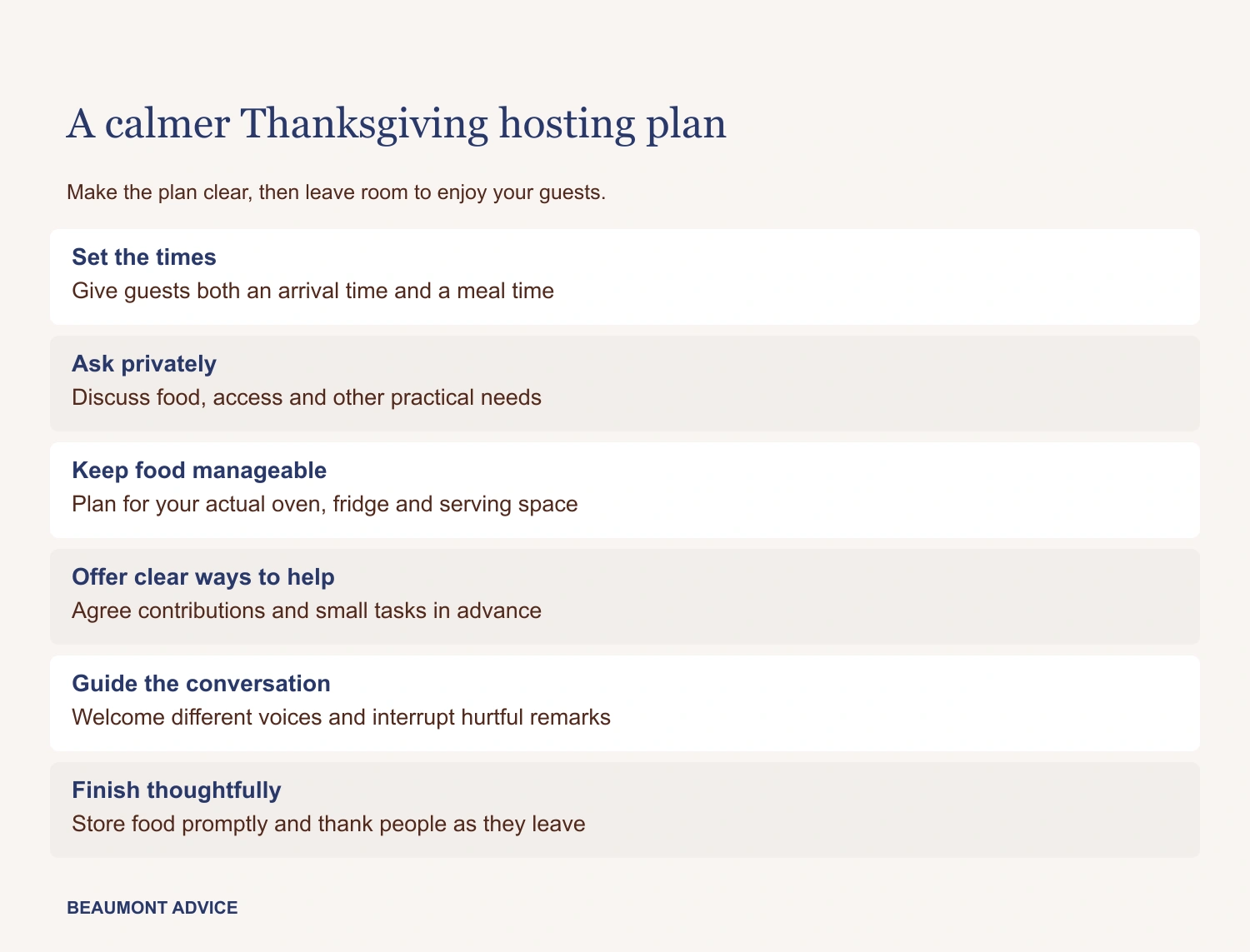
For a more detailed hosting reference, explore the paid hosting guide in the Beaumont Etiquette Collection. It brings together hosting advice, visuals and an event checklist. The practical Thanksgiving advice in this article remains free to read.
Make the invitation specific
Give separate arrival and meal times. "Come from 2:30; we plan to sit down at 3:30" is easier to act on than "Thanksgiving in the afternoon." Add the address and anything useful about parking, stairs, pets, or what guests should bring.
If you have a natural finishing time, mention it kindly: "We'll have dinner and dessert, then wrap up around seven so the children can settle for bed." Clarity gives people room to arrange their day without guessing how long you expect them to stay.
Ask for the information you need to plan. If someone wants to bring another guest, consider your space and capacity before agreeing. "I'd love to include Sam, but I only have room for the number already confirmed" is a reasonable answer. A warm invitation does not require unlimited seating, food, or energy.
For guests staying overnight, agree on arrival and departure dates separately. Do not leave either household to discover the plan during dinner.
Ask about food and access needs privately
Try: "Is there anything about the food or setup that would help you enjoy the afternoon?" That can open a conversation about an allergy, a step at the entrance, a place to feed a baby, or somewhere quiet to take a break.
Avoid collecting personal explanations you do not need. Ask what would be helpful rather than why a guest needs it. If you cannot provide something, say so early enough for the person to make another plan.
Food allergies need a specific conversation. Ask the guest what preparation and serving arrangements they require, keep ingredient packaging available, and be honest about what your kitchen can manage. FARE's Thanksgiving advice recommends advance planning and attention to cross-contact. A guest who brings their own meal is helping make attendance possible; welcome it without taking offense.
Do not describe food as safe for someone's allergy unless you have the information and arrangements to support that statement. When uncertain, let the guest decide what they can eat.
Build a menu you can serve calmly
Make a short list of the dishes you truly want, then check the oven, refrigerator, and serving space those dishes need. Five elaborate sides that all require the same oven shelf may be harder to host around than three familiar dishes.
Choose some food you know how to make and some you can prepare in advance. Buying a pie, ordering part of the meal, or accepting a guest's contribution does not diminish your hospitality. Be transparent if an ingredient or preparation method matters to a guest.
Write down the final hour of preparation. Include practical tasks that recipes often omit: warming a serving dish, filling water glasses, finding the carving knife, and giving yourself time to change. If you are sharing the hosting, decide who will greet arrivals while the other person finishes the food.
For the table itself, use Beaumont's Thanksgiving table-setting guide. Keeping that task separate makes the cooking plan easier to follow.
Accept help with a clear request
When someone asks what to bring, offer a manageable task: "A ready-to-serve green salad for eight would be lovely. Could you bring the serving bowl and tongs too?" Confirm whether a dish needs reheating or refrigerator space before the day.
For a potluck contribution, agree on the plan in advance. Avoid asking someone to bring an expensive centerpiece dish as a surprise. Keep contributions appropriate to their circumstances, and let a guest decline without embarrassment.
On the day, offer bounded jobs to willing helpers: taking coats, putting bread in a basket, or clearing water glasses after dinner. "Could you do this one thing?" is easier than leaving someone to guess what is useful.
A guest is not obliged to become part of the kitchen team. If you prefer to work alone, accept the offer warmly: "Thank you. Everything is under control; please make yourself comfortable."

Welcome people before correcting the plan
Greet arrivals, show them where to put coats, and offer a drink. Give nonalcoholic choices without commentary: "We have sparkling water, apple cider, tea, and wine. What would you enjoy?" Do not turn a drink choice into a question about health, pregnancy, religion, or recovery.
Introduce a guest who knows fewer people and give the conversation somewhere to begin. "You both love old houses" is more helpful than announcing that someone is shy. Check back later without hovering.
If a guest is late, avoid making the whole table wait indefinitely. Tell them the plan plainly: "We are going to start dinner, and we'll help you get settled when you arrive." Keep food safety in mind rather than leaving a plate out for hours.
When a contribution differs from what you expected, thank the person first. Solve the serving problem quietly. Nobody needs a public explanation of why their casserole does not fit your schedule.
Have a way to redirect difficult conversation
Prepare one or two changes of subject that sound natural in your family. "Before we get into politics, tell me about that trip you were planning" can redirect a developing argument. You can also invite a new voice: "Alex, how did your first garden turn out?"
You do not have to keep smiling through an insulting comment. A calm boundary may be clearer: "We're not making comments about anyone's body at this table," or "I want everyone to feel welcome, so let's leave that subject here."
If a conversation is becoming heated, take a pause rather than staging a debate. Ask a willing person to help you bring in dessert, or suggest moving to another room. Avoid making the person targeted by a comment responsible for restoring the mood.
Leave space for people who are grieving, exhausted, or having a difficult year. A round of gratitude should be an invitation, not a demand to describe something painful publicly. "Share if you would like to, or just enjoy listening" gives people a choice.
Make the day workable for children
Tell parents what the afternoon will look like and ask what helps their child participate. A familiar food, a short break, or a small activity away from the busiest room may make the meal easier.
Offer children a useful role they can manage, such as setting napkins or handing out place cards. Avoid turning the gathering into a public manners lesson. If a reminder is needed, give it quietly and briefly, with the parent taking the lead.
Do not require hugs, kisses, a clean plate, or a performance for relatives. A wave, a spoken greeting, or a few minutes of quiet participation can still communicate welcome. Host the children who are actually there, not an imaginary group who can sit still for three hours.
Finish with care
As the meal winds down, offer leftovers if you wish, but let guests decline. USDA guidance says to refrigerate perishable food within two hours, or one hour when temperatures exceed 90°F. Divide food into suitable containers promptly rather than leaving it out through a long afternoon.
Thank people for coming and for any help or contribution. If you need to end the evening, be friendly and direct: "I've loved having everyone here. I'm going to start closing things down now." You can begin collecting coats without inventing an excuse.
For more practice with invitations, hosting, conversation, and reciprocity, explore Society Savant. For this Thanksgiving, choose one useful preparation to make now. A clear invitation or a thoughtful question to a guest can do more for the day than another dish on the menu.
Keep a free Thanksgiving planning checklist
If a short printable would help you organise the day, download the free Holiday Hosting Checklist. Use it for your invitation details, guest needs, food plan and final checks. This optional checklist is separate from the paid Collection hosting guide; the article does not require a download or newsletter signup to read.
For the place settings themselves, follow our labelled Thanksgiving table-setting guide, including the bread plate, wine glass and dessert cutlery.