

Hosting a business dinner means making it easy for everyone else to participate. Your guest should be able to focus on the conversation, the relationship, and the purpose of the evening without wondering where to sit, what to order, or who will handle the bill.
The best hosts remove small points of uncertainty before they become visible. They choose a restaurant that supports conversation, share the right information in advance, guide the meal at an unhurried pace, and close the evening with warmth. That preparation reads as confidence because it gives everyone room to relax.
Before the Dinner: Make the Important Decisions Early
A polished dinner starts well before anyone reaches the table. Begin by defining the purpose in one sentence. Are you thanking a client, getting to know a potential partner, welcoming a new colleague, or discussing a specific proposal? The answer should shape the guest list, location, timing, and tone.
Keep the group small enough for one shared conversation when relationship-building is the priority. A larger table asks for a seating plan and extra care to include people at both ends.
Choose a restaurant for the people, not for the performance
The most fashionable room is not always the most useful room. Look for a restaurant with attentive service, comfortable seating, and a sound level that permits conversation. Confirm the dress code, accessibility, cancellation policy, and whether the kitchen can manage known dietary needs.
For an important dinner, call ahead. Ask where the table will be, how the room sounds at that hour, and whether payment can be settled away from guests.
Send an invitation that answers practical questions
A business invitation should make the plan easy to understand. Include the date, arrival time, restaurant name and address, expected end time, dress guidance when helpful, and the purpose in a natural phrase.
For example:
“I’d be delighted to host you for dinner at The Example Room on Wednesday, August 19, at 7:00 p.m. It would be a pleasure to continue our conversation about the fall partnership. The restaurant is business casual, and I expect we’ll finish by 9:00.”
After the guest accepts, send a calendar invitation with the reservation name and your mobile number.
Ask about dietary needs discreetly
Ask every guest the same neutral question: “Are there any dietary needs or accessibility details I should keep in mind when I make the arrangements?” This avoids singling anyone out and gives the restaurant time to prepare.
The host’s role is to solve logistics, not to ask for a personal explanation. Pass only the necessary information to the restaurant.

The Host’s Pre-Dinner Checklist
By the morning of the dinner, confirm the following:
- The reservation name, time, table location, and number of guests
- Dietary needs and any accessibility requests
- The restaurant’s dress code and likely noise level
- The preferred seating arrangement
- The business purpose and two or three conversation themes
- The method for paying the bill privately
- Transportation details when the venue is unfamiliar
- The name and pronunciation of every guest
For a multi-person dinner, plan the seating. Place the lead guest where the host can speak with them easily, and make sure no one is left without a natural conversation partner.
Arrival: Be Ready Before Your Guests
Arrive 15 to 20 minutes early. Check the table, speak with the lead server, confirm dietary notes, and arrange payment. Put your card on file if the restaurant permits it. This is also the moment to learn whether an item is unavailable or whether the kitchen needs orders by a particular time.
Wait near the entrance or at an easy-to-find point. When guests arrive, greet them promptly and make any introductions they need. A useful business introduction includes the person’s name and a point of connection:
“Maya, may I introduce Daniel Cho, who leads our client experience team? Daniel, Maya oversees partnerships at North & Co., and you both have a keen interest in hospitality.”
If a guest is delayed, send one calm message, then make the group comfortable. You might order water and say, “We’ll give Alex a few more minutes, and then we can begin.” Avoid turning the delay into a topic of criticism.
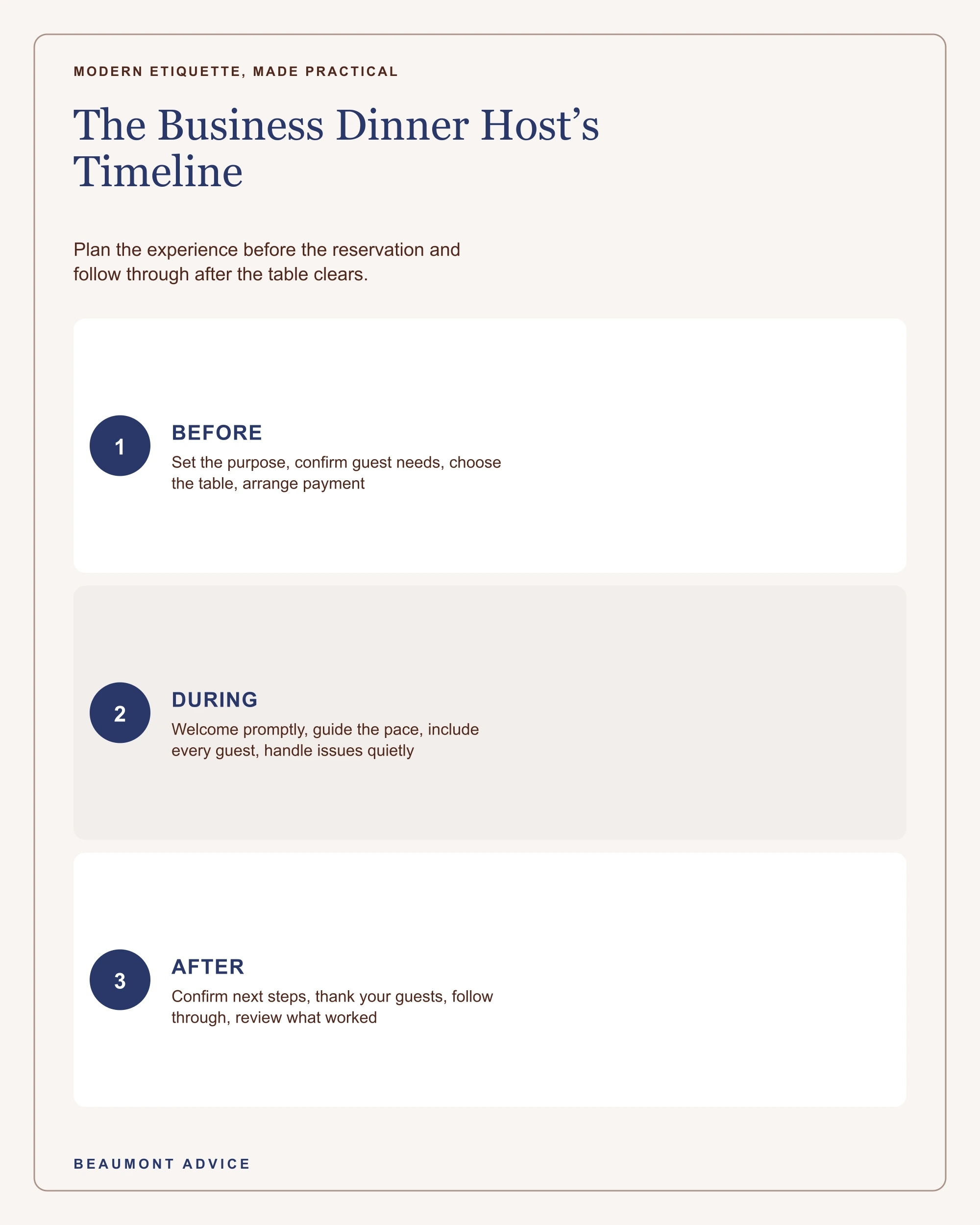
During the Meal: Set the Pace Without Controlling the Table
The host gives light direction so guests never have to guess what happens next. Once seated, indicate that everyone may order a drink.
Help guests order comfortably
Guests often look to the host for a sense of price and number of courses. Offer that guidance without discussing cost:
“Please choose whatever appeals to you. I’m planning to have a starter and a main course.”
If you would like to share appetizers, ask rather than announce. Shared plates may be unsuitable for some dietary needs. Order within the same general range you are inviting others to choose.
Treat alcohol as optional
Offer wine or another drink without making it the social standard. “Would anyone care for wine, or shall we begin with sparkling water?” gives each guest an easy path. A guest should never have to explain why they are not drinking.
If alcohol is served, keep the pace measured and avoid repeated pressure to refill.
Guide the conversation from connection to purpose
Begin with topics that help people settle in, such as travel to the restaurant, a shared professional interest, or a recent cultural event. Move toward business once everyone has ordered or after the first course arrives. Unless the dinner was expressly arranged as a working session, avoid opening with documents, figures, or a hard request.
A simple transition works well:
“I’ve enjoyed hearing about the new office. May I ask how that growth is shaping your priorities for the coming year?”
Use questions that invite more than a one-word answer. Listen for details you can return to later. If one person is quiet, bring them in with context: “Priya, you mentioned your team recently handled a similar launch. What did you find most helpful?”
Keep confidential, divisive, or deeply personal subjects away from the table unless the guest introduces them and the setting is suitable. If conversation turns uncomfortable, redirect without scolding:
“That has certainly prompted strong views. I’d be interested to hear what everyone is seeing in client expectations this year.”

Handle Small Problems Quietly
A spill, late course, mistaken order, or awkward comment does not need to define the evening. The host’s calm response gives the table permission to move on.
If you use the wrong utensil, continue without announcing it. The service team can adjust.
If a guest’s order is wrong, help them get the server’s attention, then continue the conversation while it is corrected. If service is slow, speak privately with the server or manager. Public complaints make guests feel trapped between the host and the restaurant.
Phones should remain out of sight unless there is a stated need. If you must check yours, say, “I’m expecting one time-sensitive message. Please excuse me for a moment.” Keep the interruption brief.
The Bill: Remove the Moment of Debate
The person who issued the invitation should expect to pay. Settle the bill away from the table when possible, or have a card on file. If the check arrives, receive it quietly and continue the conversation while you review it.
When a guest offers to contribute, a warm, direct answer is enough:
“Thank you, but this evening is my pleasure.”
If company policy prevents either party from accepting hospitality, address that before the dinner. You can agree to separate checks, choose coffee instead, or select another format that fits both organizations’ rules.
Close the Evening with Direction and Warmth
Watch the promised end time. When the meal and conversation have reached a natural close, summarize any agreed next step and signal the finish:
“This has been such a useful conversation. I’ll send the revised outline tomorrow, and Elena will suggest two dates for the site visit.”
Thank your guests, help with coats if appropriate, and make sure anyone who needs transportation can arrange it safely. A business dinner should end before attention and energy have plainly faded.

After the Dinner: Follow Through While the Conversation Is Fresh
Send a message the next morning. Thank the guest for their time, mention one specific point from the conversation, and confirm any action you own. If no business follow-up is required, a brief note still completes the gesture.
For example:
“Thank you for joining me last night. I especially enjoyed our conversation about the new client welcome process. As promised, I’ll send the revised outline by Thursday afternoon.”
Record only work-relevant logistics in a system approved by your organization, such as a preferred meeting format. Do not store health information or personal details without clear permission and a legitimate need. Keep every note factual and respectful.
A quick post-dinner review
Ask yourself:
- Did every guest have a chance to participate?
- Was the pace comfortable?
- Did I protect the stated end time?
- Are the next steps clear?
- Is there anything I should change for the next invitation?
This short review turns one successful dinner into a repeatable hosting practice.
Frequently Asked Questions
Who chooses the restaurant for a business dinner?
The host usually chooses, taking the guest’s location, dietary needs, accessibility, and the purpose of the dinner into account. Offer one clear plan rather than sending a long list of options.
When should business conversation begin?
Let guests arrive, settle, and order first. Moving toward the main purpose after drinks or the first course often feels natural. A stated working dinner may begin sooner.
What if a guest arrives very late?
Check in privately, begin when waiting would inconvenience the group, and welcome the guest without a public reprimand. The business concern can be addressed later if needed.
Prepared Hosting Creates Room for Real Conversation
A strong business dinner feels easy because the host has already made dozens of quiet decisions. Choose a setting that serves the people, give guests useful information, guide the pace lightly, and follow through exactly as promised. The result is a meal where professionalism and hospitality support the relationship rather than compete for attention.
Practice Business Dining with a Private Instructor
Beaumont’s Business Etiquette Private Course can be shaped around client hosting, professional presence, and the situations you want to handle with greater ease.

