
Plan the guest list, explain who is invited, and make replies easy without turning a child’s birthday into a source of pressure.
A child’s birthday invitation should make another family feel welcome and tell them what they need to know. Yet a short message can raise surprisingly large questions. Must the whole class come? Are siblings included? Should parents stay? Can you say no gifts?
Start with the party you can comfortably host. Decide the number of children, adult supervision, location, budget, and activities before promises are made. Then write an invitation that accurately describes those plans. Children can help choose friends and colors; adults should manage the practical commitments and sensitive conversations.
The guidance below suits many contemporary family parties. School rules, venue policies, cultural traditions, and individual needs may change the details. The aim is clear communication and thoughtful treatment of children, including those who are not invited.
Make the guest list before discussing it publicly
You do not need to host a class-sized celebration simply because your child attends school. A small gathering with a few close friends is a reasonable choice. Consider how many children the setting and supervising adults can comfortably support, rather than working toward a number dictated by social pressure.
If you are inviting almost everyone in an established group, pause before leaving out one or two children. Consider the effect of that decision and whether a different party size would be kinder. This does not mean children must include someone who has harmed them or make unsafe situations manageable alone. Speak privately with the appropriate adults when a relationship involves safety or repeated mistreatment.
Help your child understand the difference between making choices and making a public ranking of friendships. “We are having a small party at home” is enough. “You are not one of my best friends” is not a message another child needs to hear.
Send invitations privately when the group is selective
Check the school or activity group’s invitation policy. Some permit distribution only when the whole class is included; others ask families to arrange all private parties outside school. Follow the actual policy rather than relying on another parent’s recollection.
When inviting only some classmates, contact their parents directly by an appropriate private channel. A class-wide group chat can make a selective guest list unnecessarily visible. Do not ask the teacher to manage replies or explain exclusions unless that is part of an agreed school arrangement.
Coach your child to enjoy the anticipation without discussing every party detail in front of children who are not attending. You are not asking the child to keep a shameful secret. You are teaching awareness of an audience and the value of sharing exciting news thoughtfully.

Include the details parents actually need
A useful invitation gives the birthday child’s name, the invited child’s name, date, start and finish times, full location, host contact, response deadline, and the nature of the activity. Explain whether food will be served and whether clothing or equipment is needed.
For example:
“Please join us to celebrate Amara’s seventh birthday with a craft afternoon on Sunday, October 18, from 2 to 4 p.m. at our home, 24 Willow Lane. We will serve snacks and cake. Comfortable clothes for painting are welcome. Please reply to Leila by October 11. Let us know privately about any food allergies or access needs so we can discuss arrangements.”
Add the supervision information immediately after the practical details. If the address is shared through a digital service, check that confirmed guests can retrieve it easily. Parents should not need to search through an old group conversation for the collection time.
A few weeks’ notice is a useful planning starting point for many local parties, with more time where travel or a busy holiday period is involved. It is a suggestion, not a universal deadline. Work back from the venue’s final-number date and leave yourself time to follow up.
Be explicit about parents and drop-off
Never assume families agree on when children are ready to attend without a parent. Readiness depends on the child, activity, supervision, and familiarity with the hosts. There is no single etiquette age that settles it.
If parents should stay:
“This is a stay-and-play party. Please plan for one parent or caregiver to remain with your child.”
If you are offering a drop-off arrangement:
“Parents are welcome to drop off at 2 p.m. and collect at 4 p.m. Please contact me beforehand if you would prefer to stay so we can plan the space.”
Before the party, agree directly on supervision, emergency contact details, collection arrangements, and any relevant care needs. An invitation cannot replace that conversation. If a family is uncomfortable with the arrangements, accept their decision to stay by agreement or decline without making the child feel difficult.

Clarify whether siblings are invited
Name the invited child or children. If you welcome siblings, say so and ask for the total number attending. If the activity has fixed places, explain the boundary kindly:
“We have reserved a craft place for each invited child, so we are unable to include siblings in the activity.”
This tells parents the plan without implying their other children are unwelcome as people. Where a staying parent will need to bring an infant, discuss that situation privately rather than treating every family circumstance as identical.
As a guest, do not arrive with an unconfirmed sibling. If childcare makes attendance impossible, explain briefly and allow the host to respond. A genuine logistical question is fine; repeated requests after a clear answer place pressure on the family.
“Thank you for inviting Noah. I cannot arrange care for his younger sister that afternoon, so we may need to decline. I understand the activity has a fixed number of places.”
Ask about food and access without making assumptions
Invite parents to contact you privately about food allergies, mobility, sensory needs, or other requirements that could affect attendance. A small amount of early information may help you discuss a quieter space, the layout, or an alternative activity.
Do not promise an allergy-free party or a specific level of access unless the actual arrangements support that promise. A venue may have limitations. Share accurate information and make a plan with the parent, venue, and appropriate professionals where needed.
For a child who finds a noisy activity difficult, an advance description may be useful: “There will be music during the games, and the dining room will be quieter.” Avoid singling children out in the invitation or announcing their needs to other guests. Their family should guide what is shared.
Handle gifts with little pressure
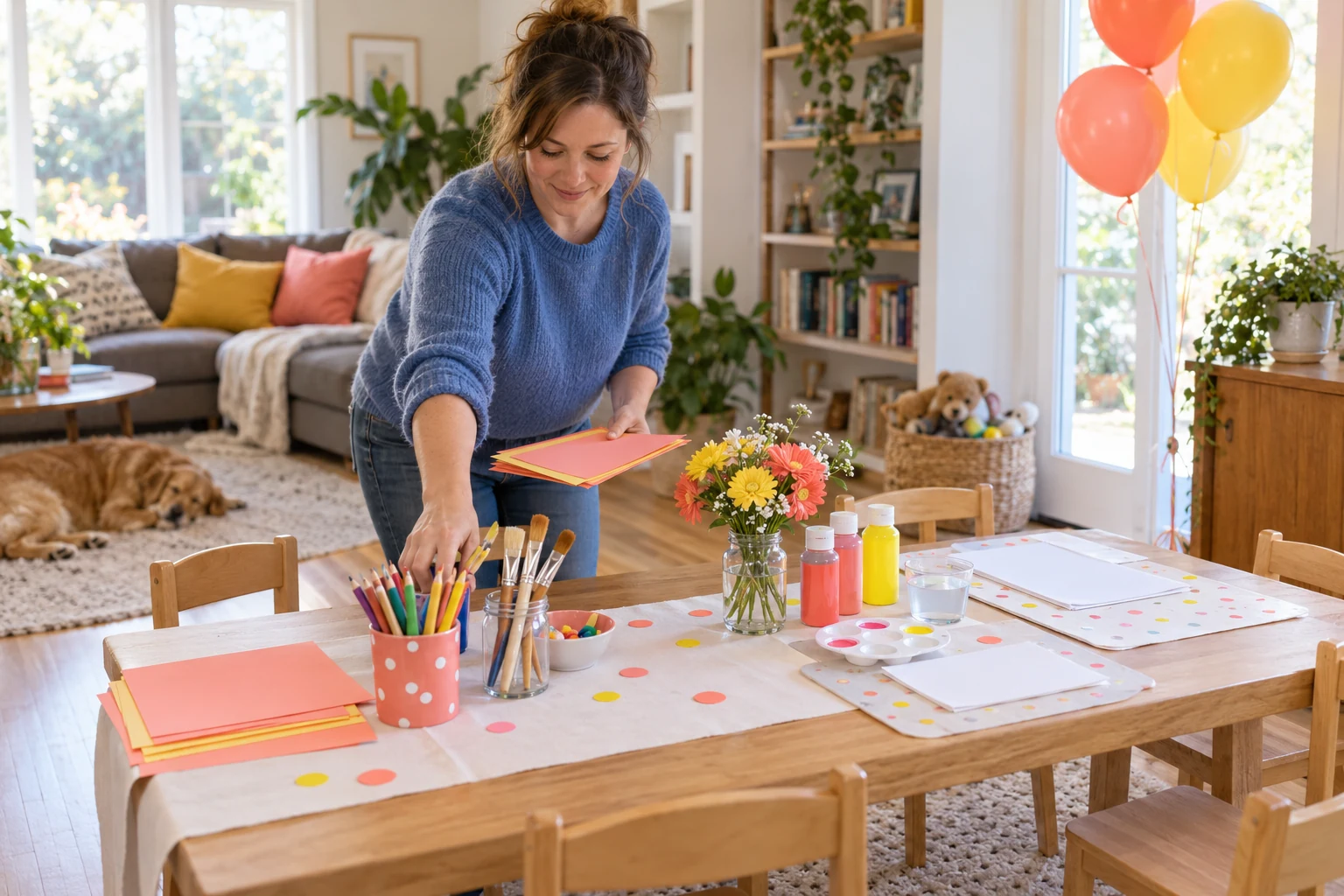
If you prefer no gifts, a simple “No gifts, please; we are looking forward to celebrating together” is clear. Guests should respect that request. A handmade card can offer a personal greeting without turning a no-gifts party into an unofficial gift exchange.
Avoid naming a required spending amount or presenting an invitation as a shopping instruction. If another parent asks what your child enjoys, suggest broad interests or a few modest ideas privately. A group present can be offered by a guest, but participation should remain optional and the amounts private.
Prepare your child before the party. Explain that friends may bring different kinds of gifts or none, and that every guest receives the same welcome. If gifts will be opened later, let close family know rather than allowing an argument over tradition during the celebration.
Teach a simple response: “Thank you for thinking of me.” Children do not need to pretend an unwanted gift is their favorite possession. They can appreciate someone’s effort without giving a public review of the item.
Reply clearly as a guest
Respond by the requested date through the requested channel. Give your child’s name and a definite answer. Include attendance by a caregiver or invited sibling where relevant.
“Thank you for inviting Ella. She would love to come on the 18th. I will stay with her as requested. I will message you separately about her food allergy.”
If declining, a warm, short answer is enough. You do not need to explain another child’s party, financial circumstances, or a family decision. Tell the host promptly if plans change after acceptance. Where illness affects attendance, make that practical decision with the appropriate health guidance rather than treating a party commitment as an obligation to attend unwell.
Manage late replies and awkward moments calmly
Hosts can send a private reminder: “We are confirming craft places tomorrow. Could you let me know whether Sam can join us?” If someone asks late, check the real capacity before saying yes. It is kind to be flexible when possible and equally reasonable to explain that places are final.
If your child is disappointed about not receiving an invitation, acknowledge that feeling without calling the other family to demand a place. You can say, “It is disappointing. Families sometimes have small parties, and it does not decide your worth or every part of a friendship.” Where there is a wider pattern of exclusion or bullying, address that pattern with the appropriate adults separately.
After the celebration, help your child thank guests in an age-suited way. A drawing, dictated message, or short written note can make gratitude a manageable habit. The invitation is the beginning of that lesson: consider other people, communicate clearly, and appreciate their time.
Give manners a place in everyday life
Beaumont’s Children’s Etiquette course gives families a structured way to practice greetings, conversation, dining, and consideration. Small, repeated lessons help children prepare for the next party and the ordinary moments between celebrations.
