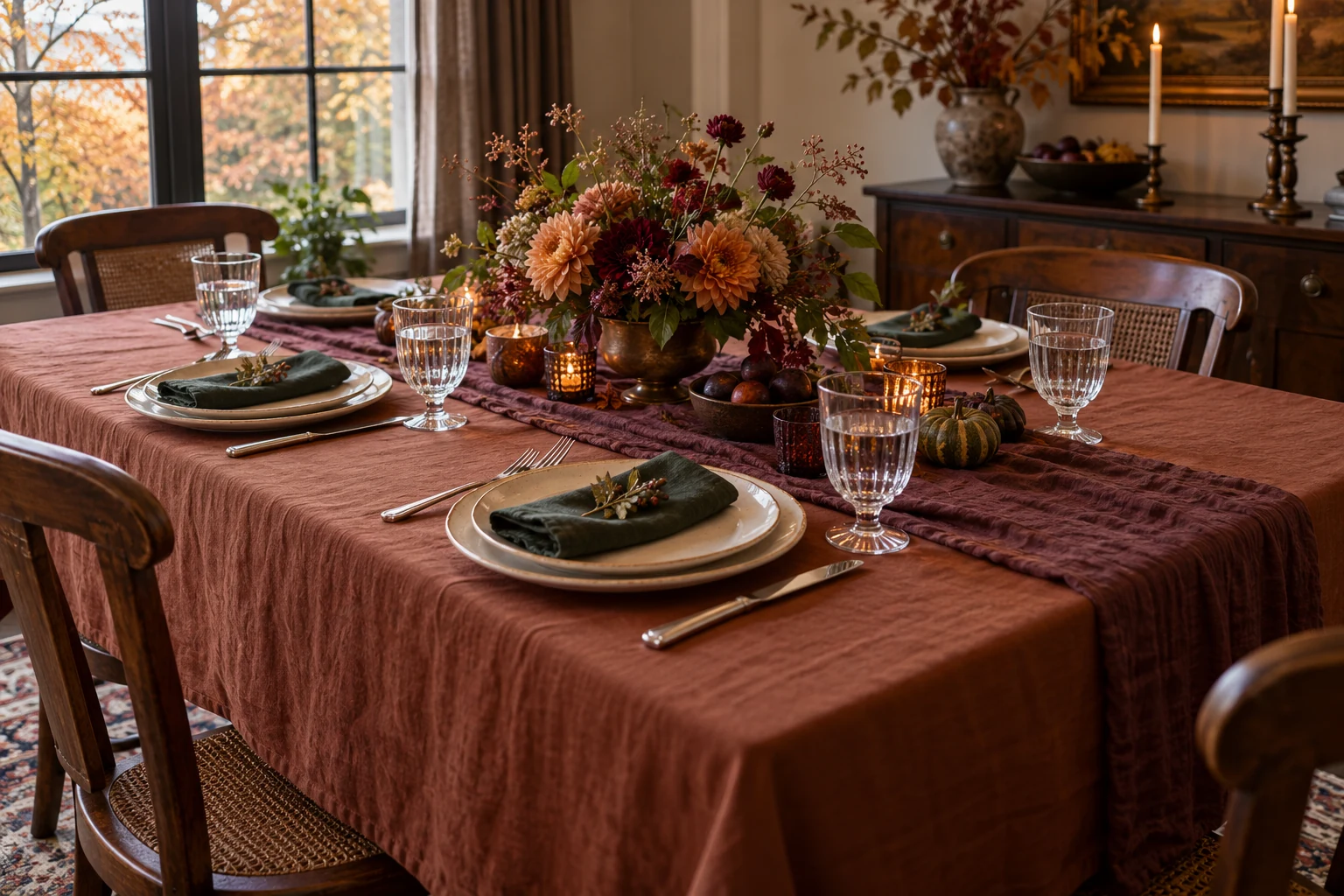
To set a Thanksgiving table, center the dinner plate at each seat and place the dinner fork to the left and the knife to the right, with its cutting edge toward the plate. Add a neatly folded napkin, a bread plate and butter knife above the forks, and water and wine glasses at the upper right. Dessert cutlery sits horizontally above the dinner plate, with a place card beyond it.
The labelled setting below shows a fuller arrangement for a Thanksgiving meal with bread, wine and dessert. It is polished without adding every possible course. Choose the pieces your menu needs, then repeat the same clear layout for each guest.
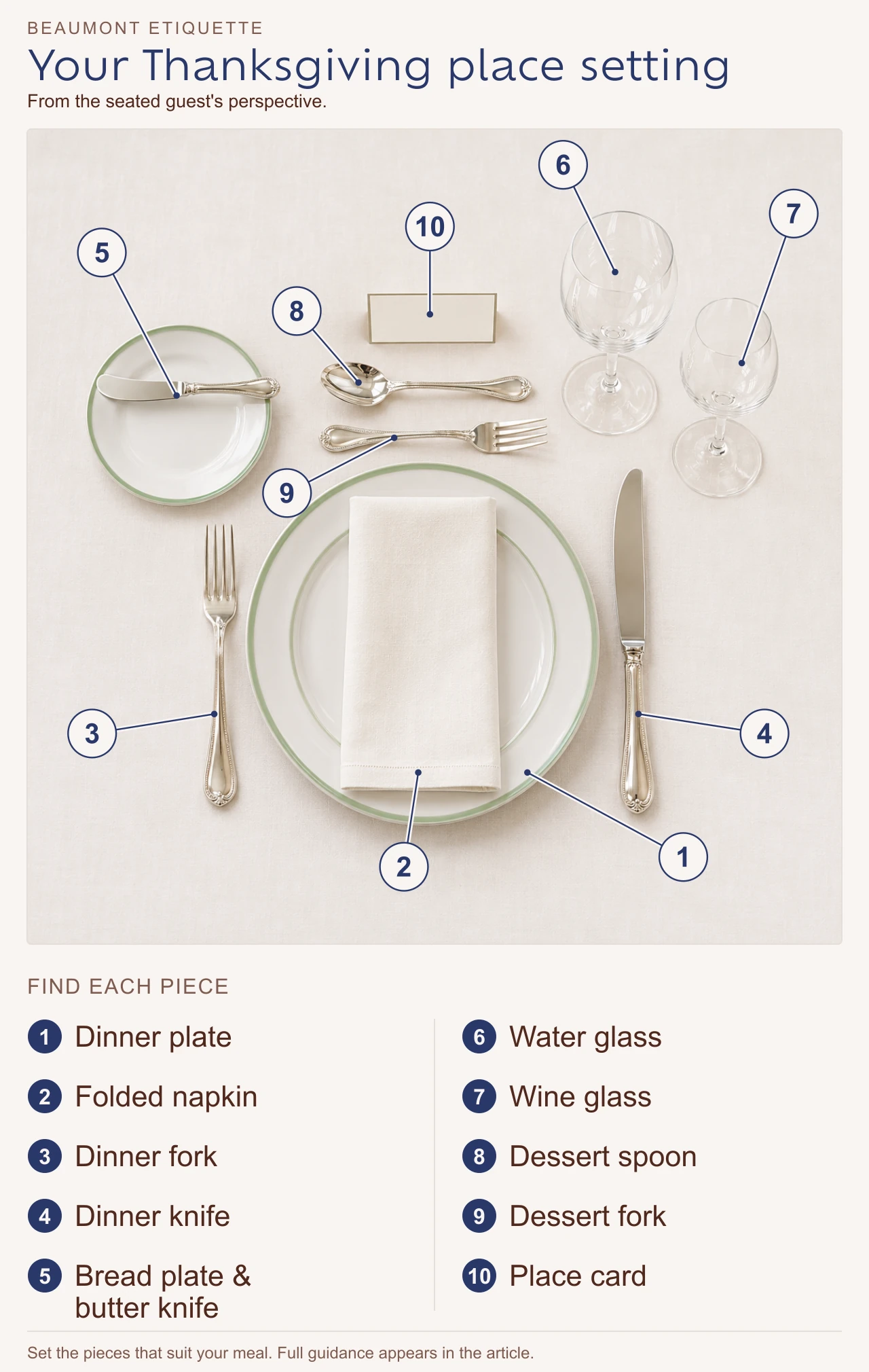
Read the labelled Thanksgiving place setting
Use these numbers with the image, looking at the setting from the seated guest's perspective:
- Dinner plate: center it on the chair so the guest can sit comfortably in front of their meal.
- Folded napkin: place the neat rectangle on the dinner plate. A napkin may also sit to the left of the fork when that works better for your service.
- Dinner fork: place it to the left of the plate, with the tines pointing toward the center of the table.
- Dinner knife: place it to the right of the plate, with the cutting edge facing inward toward the plate.
- Bread plate and butter knife: put the small plate at the upper left, above the dinner fork. Lay the butter knife across it, with its handle to the right and cutting edge inward toward the plate.
- Water glass: place it above the dinner knife, at the upper right of the setting.
- Wine glass: place it to the right of, and slightly below, the water glass. Leave room to lift either glass without touching the other.
- Dessert spoon: place it horizontally above the dinner plate, with its handle pointing right.
- Dessert fork: place it horizontally below the dessert spoon, with its handle pointing left.
- Place card: position it beyond the dessert cutlery, where it can be read without hiding a utensil or crowding the glasses.
Begin with the meal you are actually serving
Before opening the silverware drawer, decide how dinner will work. Will you pass platters at the table, invite guests to a buffet, or bring individual plates from the kitchen? Are you serving bread with dinner, pouring wine, and finishing with a dessert that calls for a fork, a spoon or both?
The pictured setting gives those pieces a clear home. Set both dessert utensils when both suit what you are serving; otherwise use the one needed, or bring dessert cutlery with dessert. A wine glass belongs on the table when wine is being offered, rather than as a decoration at every place regardless of the drinks plan.
If you are serving separate soup or salad courses, add the appropriate utensils in the order they will be used, working from the outside in. Those extra course settings are not shown in this guide. For a buffet, dinner plates may wait near the food; set napkins, utensils and glasses where guests will eat so they do not have to balance everything while serving themselves.
Set one place before repeating it
Choose one chair and sit down briefly. Center the plate on that seat, then check the reach to the fork, knife and glasses. Keep the lower ends of the dinner fork and knife aligned, leaving enough room to handle them without touching the plate.
Use the bread plate on the left and the drinks on the right as your two anchors. Check the position of the dessert cutlery and place card above the plate, then repeat the arrangement around the table. Exact measurements matter less at home than a comfortable, consistent layout that your guests can understand.
Fold the napkin and align the details
For the simple fold shown, open a clean cloth napkin flat, smooth it, and fold it into a neat rectangle. Place it centrally on the plate so the shape looks considered and the guest can lift it easily. The fold does not need a ring, a decorative object or an elaborate shape to look elegant.
Leave the plate and napkin clear of the place card. Keeping the card above the dessert utensils makes the guest's name easy to find and avoids having to move several objects before dinner begins.
Give bread, drinks and dessert enough room
A small bread plate keeps bread and butter separate from the main course. Its butter knife stays with that plate. Keep each bread plate above its own dinner fork, rather than letting it drift toward the neighboring setting.
Position the water glass above the dinner knife and the wine glass to its right and a little lower, as shown. Keep both stems and bases clear of the dessert cutlery. Offer nonalcoholic choices with the same care; a guest should not have to explain why they prefer sparkling water.
The dessert spoon and fork are easy to distinguish by their opposite handles: spoon to the right, fork to the left. When dessert is served, the guest can bring the appropriate utensil down beside the dessert plate. Coffee cups can come out when you offer coffee, keeping the dinner setting uncluttered until then.
Let the decoration support conversation
Thanksgiving is a lovely opportunity to use color. Rust-colored napkins, green glassware, a patterned family tablecloth, or a bowl of pears can feel just as considered as an all-neutral setting. You do not need a new set of dishes to make the table welcoming.
Sit in a few different chairs before guests arrive. Can you see the person opposite you without leaning around a centerpiece? Is there room to put down the gravy boat? A decoration that looks beautiful in a photograph may be awkward during dinner.
Keep foliage, decorations, and candle flames away from serving routes, sleeves, and food. Unscented candles avoid competing with dinner; battery-operated lights are a useful option around children or a busy table. Follow the candle maker's safety instructions and never leave flames unattended.
Choose one or two decorative ideas, then leave some open space. The table will fill quickly once the meal begins.

Make seating a kindness
Place cards are optional, but they can remove the hesitation that comes when guests are unsure where to sit. First names are usually sufficient for a family gathering. Handwritten cards work perfectly well.
Think about comfort before making a clever seating pattern. Ask privately if someone would prefer a particular chair or easier access to the room. A parent may want to sit beside a young child. Someone who finds a crowded space tiring may appreciate a quieter position.
Avoid surprising a guest with a seat chosen to force a difficult conversation. Mix familiar and unfamiliar faces thoughtfully, and introduce people with a connection they can use: "Riley, Morgan has been learning to grow the same herbs you brought us."
You may label the hosts' places too if that makes the plan clearer. There is no practical need to leave them mysterious. If you decide against place cards, guide people warmly as they come to the table.
Plan for children and different needs
Give children suitable cups, manageable utensils, and enough room to eat. Everyday dishes or sturdy reusable tableware can be a sensible choice. A holiday meal should not become a test of whether a child can protect the most fragile family heirloom.
Ask before substituting a special cup or adaptive utensil for an adult. People know what helps them, and they may prefer to bring their own. An uncluttered place and a clear route to the chair often matter more than another decorative detail.
If food allergies are involved, discuss the plan before dinner. Use the preparation and serving arrangements agreed with the guest; a place card or ingredient label alone does not make food safe. FARE's Thanksgiving guidance is a useful starting point for those conversations.
Give serving dishes a home
For a family-style meal, put a serving utensil with each dish and decide where hot or heavy platters can rest. Use trivets where needed. Do not expect guests to hold a heavy dish while searching for somewhere to put it.
Ask for food to be passed rather than reaching across another person's place. A consistent direction can help dishes travel around a large table, but do not let a convention become an obstacle when someone nearby simply needs the salt.
If you are serving individual plates at home, approach from the side that is safest and least disruptive. Avoid reaching across a guest, handling hot plates over a child, or insisting on restaurant choreography in a room that cannot accommodate it.
Before dessert, remove used dinner plates, serving dishes, and utensils that are no longer needed. Leave water available. Invite guests to stay seated or move somewhere more comfortable, depending on your plan.
Check the table from a guest's seat
Take one final look at eye level. Can everyone reach their glass? Are the knife blades turned toward the plates? Are the bread plates on the left? Is there room to talk without looking through a tall arrangement?
If someone uses the wrong bread plate or puts a fork in an unexpected place, solve the problem quietly. Offer another plate or replace a utensil without making an announcement. Good hosting keeps a small mix-up small.
For more help with place settings and using utensils comfortably, explore Beaumont's Confident Dining course. Then put the finishing touches aside and welcome your guests. The table has done its job when people can enjoy being there.