

Nine age-suited ways children can practice greetings, conversation, listening, shared space, gratitude, and repair as a new school year begins.
A new school year brings fresh teachers, classmates, routines, and expectations. A child may be learning how to join a lunch table, ask for help, welcome someone else, or recover after an awkward moment.
Manners give children small actions to practice before those moments arrive. The aim is the ability to notice other people, communicate needs respectfully, protect shared space, and repair a mistake. Those skills grow through short practice at home and in daily life.
Here are nine useful manners to work on this fall, with language children can make their own.
Teach the purpose before the rule
Children are more likely to use a manner when they understand what it does. “Say hello because it helps a new person know you see them” offers more meaning than “Say hello because I said so.”
Try connecting each skill to one of three purposes:
- Recognition: “We greet people so they know we have noticed them.”
- Fairness: “We take turns so everyone has a chance.”
- Repair: “We acknowledge a mistake so the other person does not have to carry it alone.”
Adults can model the same habits. Let a child hear you greet a neighbor, ask before borrowing, thank a bus driver, and correct an interruption. A manner becomes believable when it is part of family life.
Practice in low-pressure moments. A two-minute breakfast role-play can be more useful than a lecture after a difficult day.
Skills 1 to 3: greet, use names, and listen
1. Offer a simple greeting
A greeting does not need to be loud, prolonged, or paired with physical contact. A child can look toward the person, use a clear voice, and say:
“Good morning, Ms. Alvarez.”
“Hi, I’m Theo. What’s your name?”
Some children need extra time to speak in a new setting. They can begin with a wave, a nod, or a quiet “hello,” then build from there. Respect sensory, speech, cultural, and disability needs. The social skill is acknowledgment, and there is more than one way to show it.
2. Learn and use names carefully
Names help people feel recognized. Encourage children to repeat a name once if it helps them remember:
“Nice to meet you, Amara.”
If a name is unfamiliar, asking is respectful:
“Could you say your name again for me?”
“Did I pronounce that correctly?”
Teach children to accept corrections without making the other person comfort them. “Thank you, I’ll say it that way” is enough.
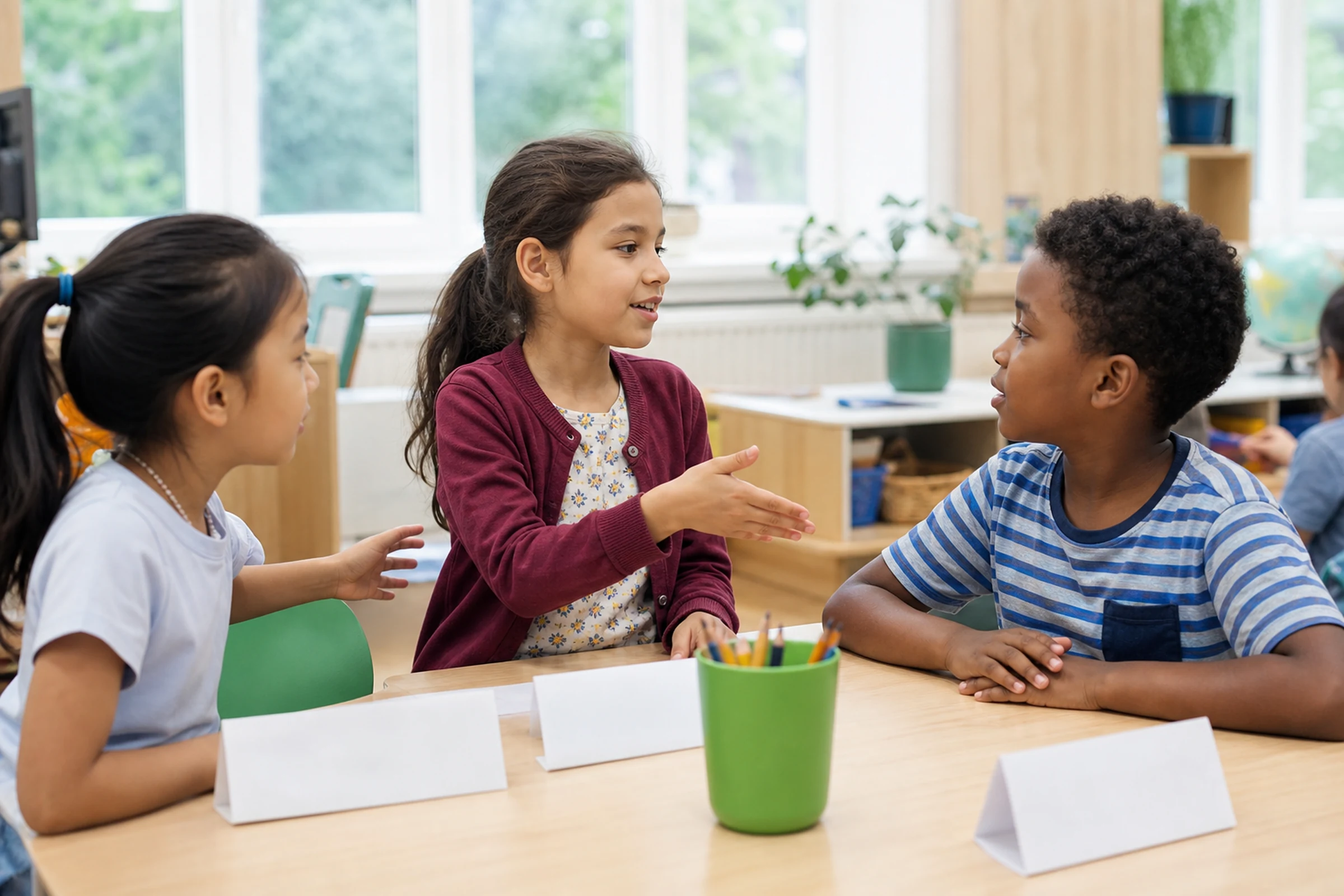
3. Listen through the end of a thought
Listening includes keeping the body reasonably still, letting the speaker finish, and responding to what was said. Eye contact may help, but it should not be treated as the only sign of attention. Some children listen better while looking slightly away or using a quiet sensory support.
At home, practice a “one question, one follow-up” game. One person shares a small detail about the day. The listener asks one related question before changing the subject:
“You said art was your favorite class. What did you make?”
This builds curiosity and helps conversation feel shared.
Skills 4 to 6: include, share, and respect space
4. Make one opening for someone else
Children do not have to become friends with everyone. They can still make a moment less lonely. An opening may be as simple as moving a backpack, explaining a game, or asking:
“Would you like to sit here?”
“We’re drawing animals. Do you want paper?”
Teach children to invite without pressuring. If the other child says no, “Okay” is a complete and gracious response.
5. Take turns with shared things
Classroom supplies, playground equipment, chargers, books, and group materials belong to a shared system. Useful phrases include:
“May I use that when you’re finished?”
“I need two more minutes, then it’s your turn.”
“Let’s ask the teacher how to share it fairly.”
A child may need adult help when another person refuses, grabs, or uses an item unsafely. Manners never require a child to surrender every boundary or solve every conflict alone.

6. Notice bodies, belongings, and noise
Shared space asks for awareness. Children can practice keeping bags out of walkways, leaving room in a line, asking before touching another person or their belongings, and choosing a voice level that fits the place.
Give the child a quick three-part check:
- Where is my body?
- Where are my things?
- How loud is my voice?
This is more usable than the vague instruction “Behave.” It tells a child what to notice and adjust.
Skills 7 to 9: show thanks, set a boundary, and repair
7. Thank the person and name the help
A specific thank-you helps children notice effort. Compare “Thanks” with:
“Thank you for showing me where the library is.”
“Thank you for saving my worksheet.”
The words do not need to be elaborate. A clear sentence, short note, drawing, or age-suited message can all work. Adults should avoid forcing public gratitude for a gift or gesture the child is still processing. Give a quiet prompt and a little time.
8. Say no with respect
Good manners include boundaries. Children need language for declining a game, a snack, physical contact, a request to share private information, or behavior that feels unsafe.
“No, thank you. I don’t want to play that.”
“Please ask before you touch my hair.”
“I’m going to ask an adult for help.”
Teach that a polite first response is useful in an ordinary situation. A child can become firmer, move away, or seek help when someone ignores the boundary. Safety matters more than perfect wording.
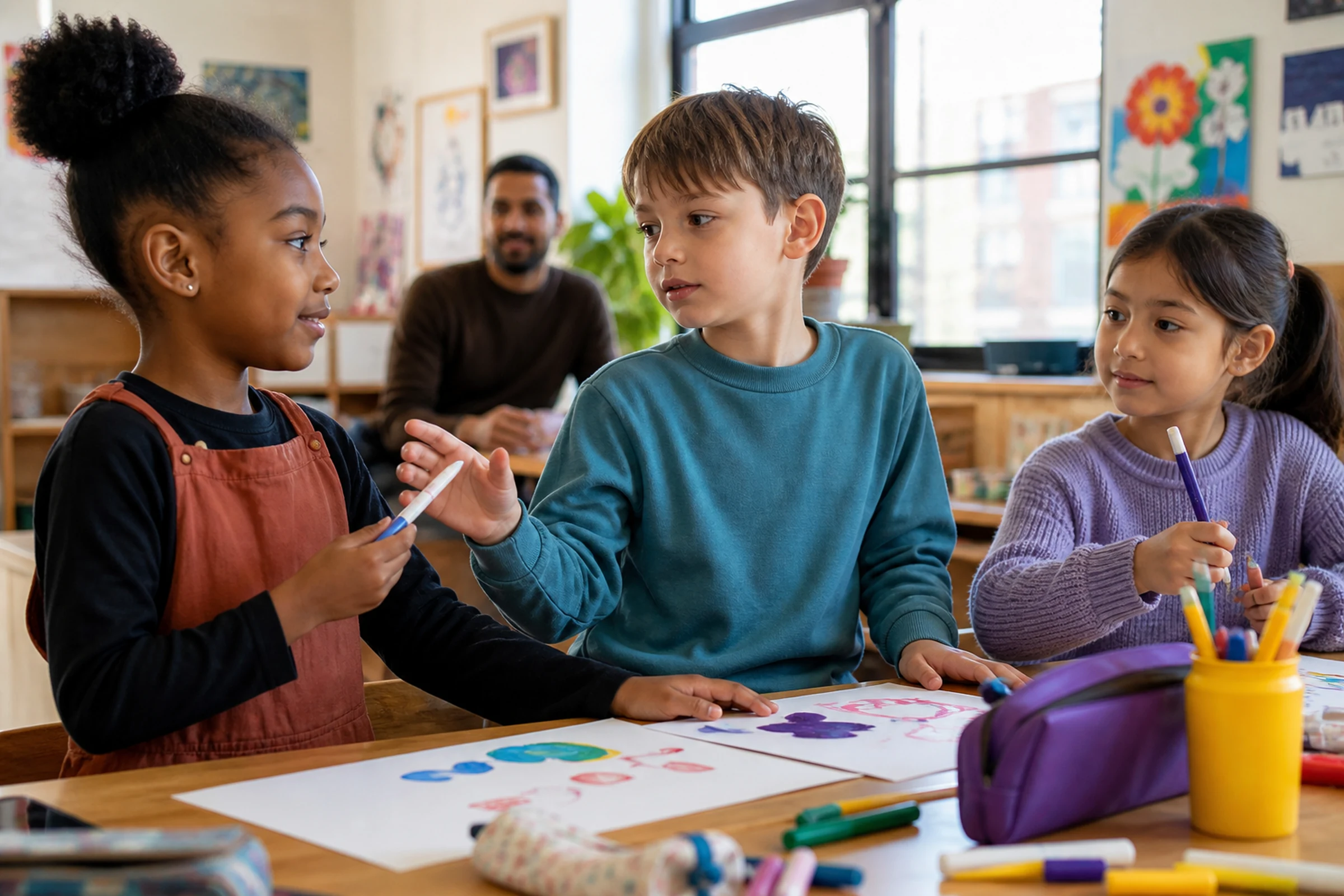
9. Repair a mistake without excuses
Children will interrupt, forget, bump into someone, say something unkind, or damage a shared item. A repair has three simple parts:
- Name what happened.
- Acknowledge its effect.
- Offer a useful next action.
For example:
“I interrupted you. I’m sorry. Please finish what you were saying.”
“I knocked over your project. I’m sorry. Can I help rebuild it?”
Avoid demanding instant forgiveness from the other child. An apology is an offer of accountability, not a request for immediate relief.
Practice without turning home into a classroom
Choose one skill each week. Name it briefly, model it, and create two or three small chances to use it. A family plan might look like this:
- Monday: Pick the skill and explain its purpose.
- Tuesday: Role-play one easy version and one awkward version.
- Wednesday: Notice the skill in a book, program, or real interaction.
- Thursday: Let the child choose the words they want to use.
- Friday: Ask what felt easy and what still felt difficult.
Keep praise specific. “You moved your bag so Sam could sit down” tells the child exactly what helped. Broad labels such as “You’re such a good girl” or “You’re the polite one” can turn a practiced action into pressure about identity.

Role-play should include recovery, because real interactions rarely follow a script. Pretend that a classmate does not hear the first greeting. Practice what to do when two children reach for the same marker. Let the adult play the person who interrupts, then switch roles.
For an older child, ask for their ideas:
“What could you say if someone new is standing beside your group?”
“How would you want a person to correct your name?”
Children often create language that sounds more natural among their peers. The adult’s role is to help the wording stay clear, kind, and safe.
Work with the school’s own expectations
Schools differ in greeting customs, device rules, meal routines, forms of address, and support systems. Review the handbook and listen to the teacher’s instructions. If a classroom practice conflicts with a child’s accessibility, cultural, religious, health, or safety needs, contact the school privately and ask how the need can be supported.
Help children identify trusted adults and the kinds of situations that call for help. A disagreement over whose turn comes next may be solved with words. Bullying, threats, unwanted touch, discrimination, repeated exclusion, or unsafe behavior should go to an adult.
Manners should never teach a child to remain pleasant in a harmful situation. They should give the child more ways to communicate, seek support, and take part with respect.
Frequently asked questions
What age should manners lessons begin?
Children can practice simple social habits as soon as they can take part in them. A toddler may wave or help put an item back. An older child can learn fuller conversation, consent, and repair language. Keep the expectation suited to the child’s age and needs.
Should I remind my child in front of other people?
Use a quiet cue when possible. A private reminder protects dignity and is easier to receive. Agree on a signal beforehand, such as a light touch on your own chest to prompt “thank you,” or one family word that means “check your voice level.”
What if my child is shy or does not like eye contact?
Do not make sociability or eye contact the measure of respect. Practice a brief verbal greeting, a wave, a nod, or another form the child can use. Progress may mean participating in a way that is genuine and manageable.
How do I respond when another child has poor manners?
Focus on the action needed in that moment. You might say, “We’re taking turns with this,” or “Please give Ava some space.” Avoid labeling the other child. Speak with the supervising adult if the issue continues or affects safety.
Back-to-school manners are daily tools, not a performance review. Choose one small skill, explain whom it helps, and practice it with patience. A child who can greet, listen, include, set a boundary, and repair has several useful ways to meet the new year.
Give children a warm next lesson
Beaumont’s Children’s Etiquette course introduces greetings, conversation, dining skills, posture, and respect through age-suited instruction. Explore Children’s Etiquette.
