
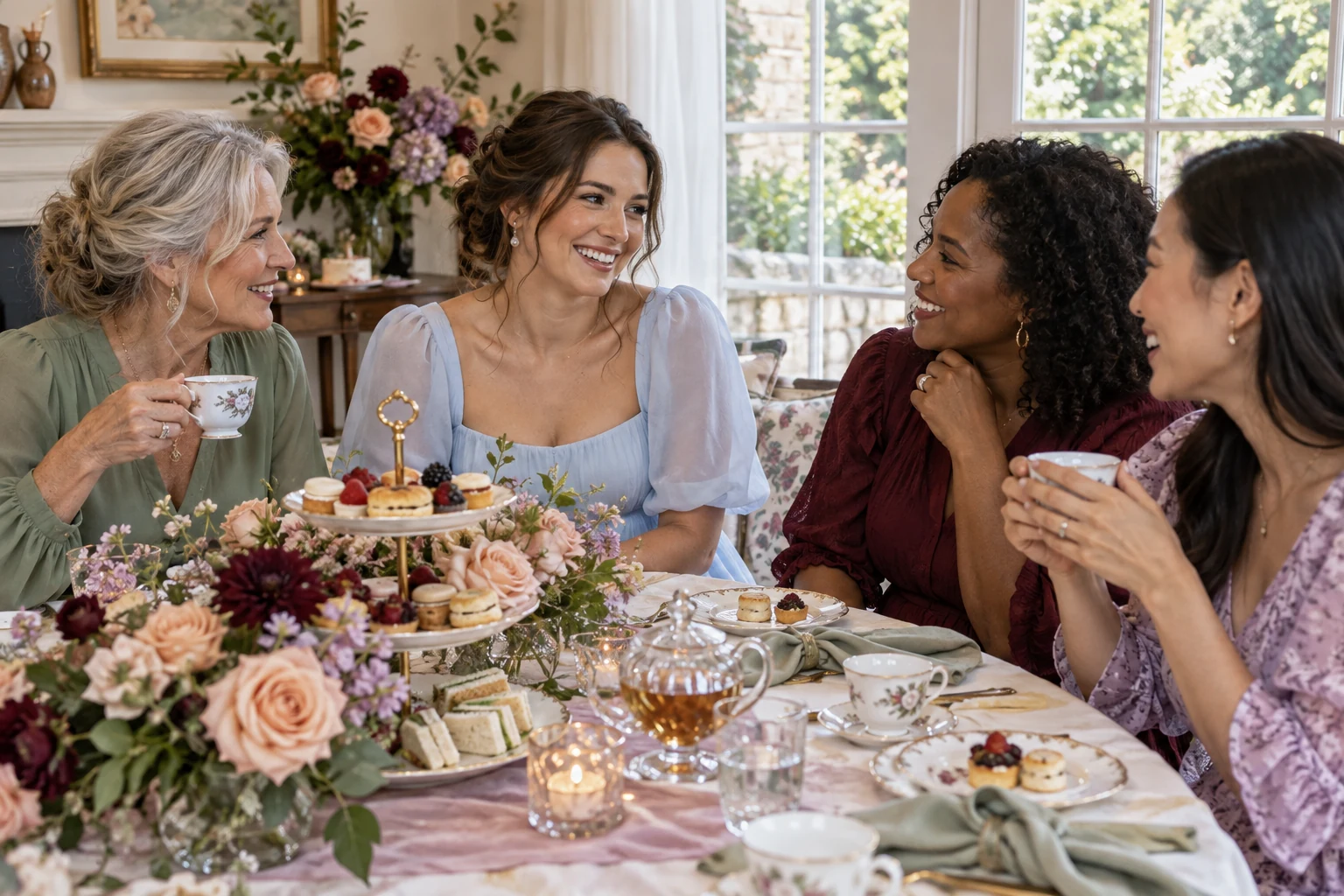
Plan a thoughtful shower with clear hosting roles, a considerate guest list, manageable gift expectations, and room for the person being celebrated.
A bridal shower can be a warm afternoon with close friends, a family tea, or a relaxed gathering around a shared activity. It does not need to resemble a second wedding. The thoughtful decisions happen before the flowers arrive: who wants to host, what they can afford, whom to invite, and what would make the guest of honor comfortable.
A traditional shower centers on gifts for someone preparing to marry. A gift-free lunch or tea is also a lovely celebration, and naming it that way can help guests understand the plan. A couple’s wedding shower can follow the same considerate approach. Use the terms the people being celebrated prefer.
Customs vary by family, culture, and community. These suggestions address common contemporary U.S. situations and offer language for handling the questions that often create unnecessary pressure.
Begin with the guest of honor
Before arranging a surprise, find out whether the person would enjoy a shower at all. Some love a room full of friends; others find games, public gift opening, or being the center of attention uncomfortable. A willing host can ask about preferences without handing over every decision.
“I would love to host a small celebration for you. Would an afternoon tea with family and close friends feel right, or would you prefer something else?”
Agree on the broad format, important guests, possible dates, and any activities to avoid. If the wedding schedule is crowded, make attendance practical. A shower planned around someone else’s vision can become another task for the honoree to manage.
You can preserve pleasant surprises in the flowers, menu, or music while confirming the parts that affect comfort and availability. Thoughtfulness does not depend on keeping every detail secret.
Who can host, and who pays?
A friend, relative, member of the wedding party, or small group may offer to host a contemporary shower. Older conventions placed greater restrictions on immediate family hosting; many families now welcome a parent or sibling’s involvement. Consider the honoree’s community and preferences rather than assuming one tradition applies to everyone.
The people offering to host should agree on the budget and responsibilities before inviting anyone or paying deposits. Being a bridesmaid or close relative does not automatically mean accepting an unlimited financial commitment.
“I would be happy to cohost. I can contribute up to this amount and handle the invitations. Does that fit the plan?”
A cohost who cannot contribute equally may offer time or another agreed task. Keep those conversations private. Decide who books the venue, manages replies, provides food, and handles cleanup. Guests should not discover an unexpected attendance charge when they arrive.

Build the guest list with the wedding in mind
For a conventional bridal shower, invite people who are also invited to the wedding. Otherwise, a guest may reasonably wonder why they are included in a gift-centered event but excluded from the ceremony or reception. Confirm the list with the couple before sending invitations.
A workplace celebration can be a different situation when colleagues independently organize a small gathering with a shared understanding that they are not all wedding guests. An intimate wedding or elopement can also prompt alternative celebrations. Make the context clear and consider a gift-free gathering where expectations could be confusing.
Keep the shower proportionate to the host’s capacity and the honoree’s relationships. Every wedding guest does not need a shower invitation. There is no requirement to include someone simply to increase the gift count, and a long-distance guest should feel free to decline without guilt.
Ask about family sensitivities privately. Avoid surprise reunions involving estrangement, divorce, or an unresolved conflict. The host’s job is to create a comfortable occasion, not to arrange a reconciliation without consent.
Write an invitation that answers practical questions
Include the honoree’s name, the event type, date, beginning and ending times, location, host’s name, reply contact, and deadline. Mention attire, an activity, or a recipe request only where the detail helps guests prepare.
“Please join us for an afternoon tea celebrating Maya before her wedding. Sunday, November 8, 2 to 4 p.m., at The Garden Room, 18 Cedar Street. Hosted by Leila and Rose. Please reply to Leila by October 25. Garden-party attire; the celebration will be indoors.”
These dates are an example, not a rule about how far ahead every shower must be planned. Allow sufficient notice for your actual guests, especially when travel is involved. Choose a reply deadline that leaves time to finalize numbers with the venue.
If children or partners are invited, make that clear by naming them or specifying the event’s format. A wedding invitation’s guest allowance does not automatically apply to every related celebration.

Explain gift expectations without directing generosity
Registry information is commonly shared for a shower because gifts are part of that event’s traditional purpose. It can sit in a separate details section, enclosure, or linked event page. Keep the welcome and occasion prominent, and offer a registry as useful information rather than a required shopping list.
Include options across a range of budgets. Guests remain free to choose something else. Avoid minimum amounts, public contribution totals, or instructions that turn a gift into the price of admission.
A group gift can help people contribute comfortably, provided nobody is pressured to participate. One organizer can coordinate privately without sharing who gave what. If you want a gift-free event, say so clearly and consider calling it a celebratory tea or luncheon to remove ambiguity.
A guest invited to several showers for the same person should not feel required to buy a fresh gift for every gathering. The couple and hosts can acknowledge earlier generosity and make the later occasion easy to enjoy.
As a guest, answer the invitation and follow the plan
Reply by the deadline, arrive close to the stated start time, and check before bringing someone not included. Let the host know privately about relevant access or dietary needs early enough to discuss the actual arrangements.
Choose a gift within your means if the event is a traditional gift-giving shower. You do not need to match another guest’s spending or make a financial calculation based on the refreshments. Add a card so the recipient knows whom to thank, particularly if the gift is delivered separately.
If you cannot attend, decline warmly. A close friend or relative may choose to send a gift or card, but an invitation should not be used to pressure an absent guest into a purchase. If you are uncertain about an unfamiliar custom, ask the host privately rather than speculating with other guests.

Plan a comfortable afternoon, not a performance
Make introductions that give guests a useful connection: “Nina, this is Maya’s cousin Jo. You both enjoy gardening.” Seat or group people with care without requiring everyone to entertain the room.
Offer activities that can be joined easily and declined quietly. A recipe collection, written wishes, or a conversation over tea may suit the honoree better than competitive games. Avoid questions about sex, fertility, former partners, or family conflict unless you have clear agreement that the specific activity is welcome. Being celebrated is not permission for others to embarrass someone.
Give the event a simple rhythm: welcome, refreshments, a short activity if desired, and time to talk. Announce practical details such as where to leave coats or find the restroom. A host who explains these things makes guests more comfortable than an elaborate decoration ever could.
Does the honoree have to open gifts in front of everyone?
Public gift opening is a familiar shower tradition, and some guests enjoy it. It is also reasonable to agree on another arrangement. Discuss the decision beforehand so the host can guide expectations. You might reserve a brief period for opening or thank guests and open gifts privately later.
If opening gifts during the event, ask someone to discreetly record the giver and item for thank-you notes. Acknowledge each gift with attention rather than comparing value or announcing prices. “Thank you, I look forward to using this when we cook together” is more thoughtful than an assessment of the brand.
If a duplicate or unexpected gift appears, thank the person sincerely. Questions about returns or exchanges belong in a private conversation later, if they are needed at all.

Finish with personal thanks
The honoree should thank the host directly and send a personal note afterward. Thank each gift giver individually, naming the gift or gesture and saying something specific about it. A group social-media post is not a replacement for a private acknowledgment.
“Thank you for the beautiful serving bowl. We look forward to using it for dinners with friends. It meant a great deal to celebrate with you on Sunday.”
Begin notes soon after the shower so they do not become lost in the wedding preparations. If they are late, send them anyway. Appreciation remains worthwhile after an ideal timetable has passed.
For hosts, the final practical kindness is to help the honoree get gifts and belongings home without leaving cleanup entirely to them. Confirm that plan before the afternoon begins. A well-planned shower leaves the person feeling supported, with time to enjoy the people who came.
Host a tea with confidence
If you are planning a shower around afternoon tea, explore Beaumont’s The Etiquette of Afternoon Tea. The course offers a next step for learning the customs of serving and enjoying tea with guests.
