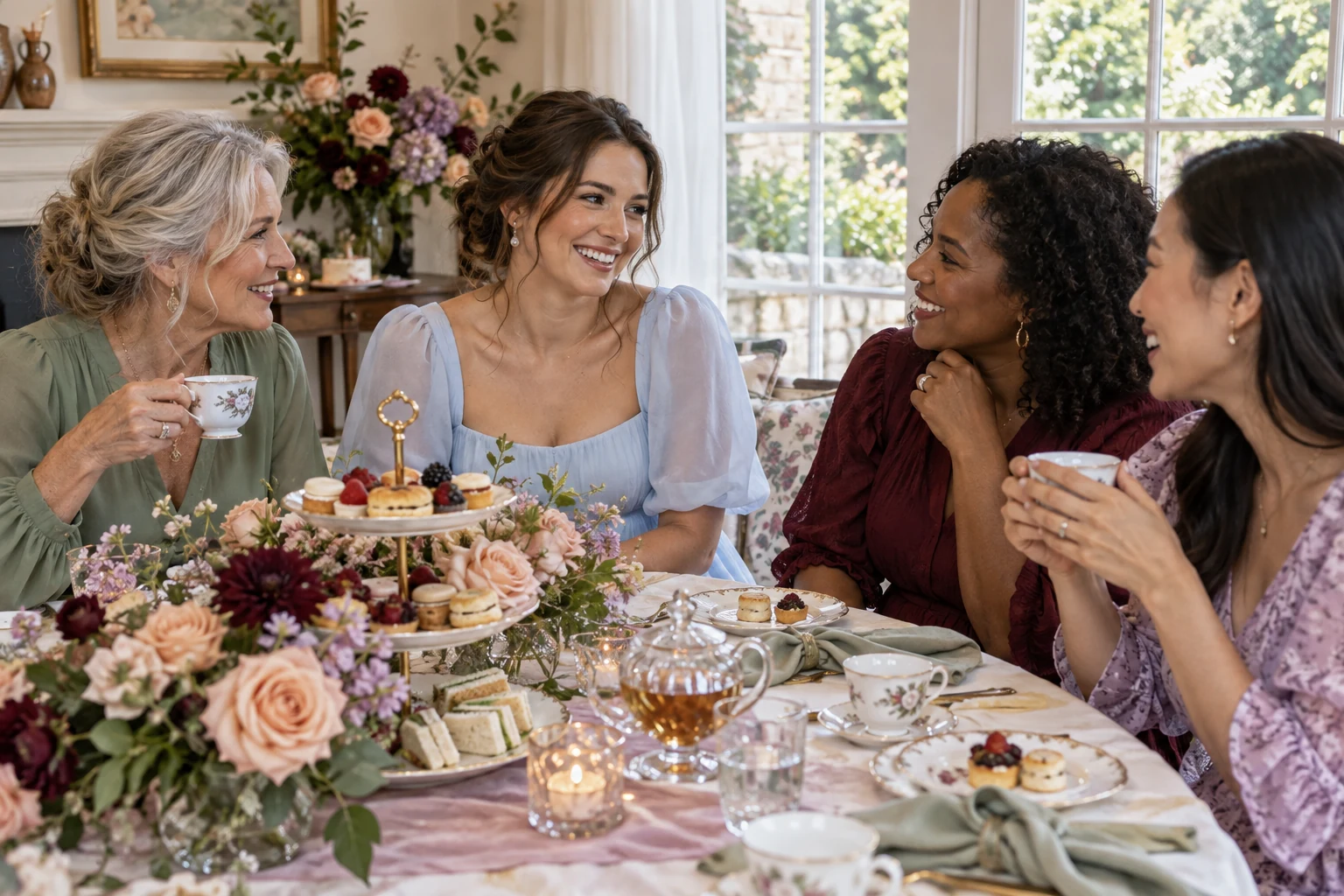
Celebrate the news without creating confusion about invitations, spending, or wedding plans. A practical guide to hosting and attending an engagement party with care.
An engagement party can be the first time two families meet, the first celebration a couple plans together, or simply a happy evening among close friends. It does not need to resemble a small wedding. Its purpose is to share the news and let people enjoy the couple’s happiness.
Most awkward moments arise when expectations remain unspoken. Guests wonder whether a gift is required. A relative assumes that hosting means controlling the guest list. Friends hear wedding details before the couple has told their families.
Good engagement party etiquette begins with a few clear decisions: who is hosting, who is invited, what kind of occasion it will be, and what the couple is ready to share. Once those questions are settled, the gathering can feel much more relaxed.
Decide what celebration the couple actually wants
Before choosing a venue or inviting anyone, ask the couple what would make them comfortable. A restaurant lunch, garden gathering, brunch at home, or informal evening can all serve the occasion. Some couples prefer to skip a party entirely.
If you are offering to host, make the offer specific and easy to decline: “We would love to arrange a small lunch for you, if that sounds enjoyable. You can decide the guest list with us.” An offer of hospitality should not become a surprise obligation.
Traditions about who hosts differ among families and cultures. Parents, friends, relatives, or the couple may take that role. Discuss any tradition that matters to the people involved, then agree on a plan without treating one household’s custom as a universal requirement.
A surprise party requires particular care. The couple may not have told everyone, or they may have private reasons for wanting a quiet celebration. Confirm their comfort through an agreed plan rather than assuming that good news automatically makes a public surprise welcome.
Agree on the budget and responsibilities first
The hosts should decide what they can comfortably offer before making commitments. If several people are contributing, agree privately on who will arrange the venue, invitations, food, and practical details. Avoid leaving the couple to resolve unclear promises later.
An invitation to a hosted party normally means the hosts provide the hospitality described. If you are organizing a casual gathering where everyone pays for their own meal, make that arrangement clear before guests accept. “Join us for dinner; each guest will order and pay individually” is more considerate than a surprise bill.
Keep the scale proportionate to the people involved. An engagement celebration does not create a requirement for expensive clothes, travel, or several rounds of presents. People can celebrate sincerely within different budgets.
If family members disagree about the size, return to a concrete choice: “We can host twelve people at home, or arrange a restaurant lunch within this budget. Which would feel best to you?” Clear options are easier to discuss than competing ideas of what a proper party must be.

Think about the wedding before sending invitations
Engagement party invitations can reasonably lead guests to expect a wedding invitation. The safest approach is to invite people the couple also intends to invite to the wedding. This helps avoid celebrating with someone now while leaving them to discover later that they are excluded.
If the wedding will be a very small ceremony or an elopement, discuss how to communicate that before arranging a larger celebration. A gathering after the marriage may be clearer because guests already understand what has taken place. If you celebrate the engagement beforehand, explain the limited wedding plans honestly and individually where needed.
Do not rely on guests to infer that a destination wedding, uncertain date, or small venue means they will not be invited. Equally, guests should avoid demanding a wedding invitation or asking the couple to add partners, children, or friends on the spot.
When the wedding guest list is genuinely undecided, keep the engagement party small enough to avoid promises the couple may not be able to honor. The invitation should celebrate a relationship without creating an unintended commitment.
Give guests the information they need
Choose invitations suited to the occasion. A thoughtful email or digital invitation can work for an informal gathering; a more formal celebration may call for printed invitations. The useful details matter more than the medium.
Include the date, start time, location, reply method, and a clear description of the format. “Drinks and light refreshments” and “Dinner at seven” create different expectations. Mention dress guidance if the venue or activity makes it helpful.
Name the people invited rather than leaving guests to guess about partners or children. Provide a private way to discuss dietary requirements or access needs. Give enough notice for the travel and preparation involved, and make replies easy to track.
If presents are not wanted, a simple “No gifts, please” helps guests understand the plan. Do not pair that statement with a registry link. If someone asks privately about giving a gift, answer in a way that respects both the stated preference and the guest’s budget.

Make introductions part of the hospitality
The hosts and couple can help people find a point of connection. “Nina, this is Theo’s aunt, Grace. You both love gardening” gives two unfamiliar guests an easy place to begin. Ask before sharing anything personal beyond what someone would readily mention themselves.
Avoid splitting the room into permanent family groups. Introduce people gradually, join a guest who seems alone, and choose seating that encourages comfortable conversation. If relatives have a difficult history, plan the room thoughtfully rather than hoping that celebration will resolve it.
Guests can help by asking open, pleasant questions that are not entirely about wedding logistics. “What have you enjoyed doing together lately?” may be more welcome than another inquiry about the venue budget.
Respect the couple’s answer when they say they have not decided something. The party is not a planning meeting. Advice about dates, surnames, ceremonies, religion, children, or finances should wait for an invitation to discuss it.

Keep gifts thoughtful and low-pressure
There is no universal requirement to bring an engagement gift. In contemporary U.S. settings, customs vary by community and relationship, so ask the host if you are uncertain. Guests should not feel pushed into spending beyond their means. A sincere card is a warm gesture. If the invitation says no gifts, follow that request.
When you are unsure, ask the host privately. Choose something appropriate to what you know about the couple rather than assuming they drink alcohol, share a particular style, or want household items. The engagement party is not the time to explain why your gift should earn special recognition.
Hosts can accept gifts discreetly and place them aside. A public opening session can make guests who did not bring a present uncomfortable, especially when expectations were unclear. The couple can open gifts later and keep an accurate record of who gave each one.
Thank each giver personally, and send a thoughtful note afterward. A message should identify the gift and acknowledge the kindness behind it. Hosts also deserve a direct thank-you for the time and care they put into the gathering.
Handle toasts, photographs, and announcements with care
A brief welcome or toast may be all the formal structure the evening needs. Agree in advance who will speak. Keep the words warm and suitable for the whole room, with no former-partner stories or private revelations.
Guests should ask before posting engagement photographs or tagging the couple. They may still be telling relatives personally, or they may prefer to keep the celebration private. An invitation to a party is not automatic permission to announce someone else’s news online.
If the couple asks for no posting, follow that request without debating it. Hosts can help by mentioning the preference gently at the start. Anyone taking photographs should also respect guests who prefer to stay out of them.
Save unrelated major announcements for another occasion unless the couple has explicitly invited them. A proposal, pregnancy announcement, or unexpected speech about another person can redirect an event arranged to celebrate the engaged pair.

Frequently asked questions
Is an engagement party required?
No. A couple can celebrate privately, share a meal with a few people, or move directly to planning the wedding. The absence of a party does not require an explanation.
Do I have to bring a gift?
There is no single expectation across all engagement parties. Follow a no-gifts request, and ask the host privately if local or family custom is unclear. Your relationship and budget matter; a thoughtful card is a considerate way to offer congratulations.
Can there be more than one engagement celebration?
Yes, particularly when family and friends live far apart. Keep expectations modest and make attendance optional. Repeated invitations should not imply repeated gifts or travel obligations.
What should a guest wear?
Use the invitation, venue, time, and planned activities as your guide. Ask the host if the dress level is unclear. Choose something that suits the gathering without turning the couple’s celebration into a competition for attention.
May I bring someone who was not named?
Check with the host rather than assuming. Guest numbers affect space, food, and cost. If the invitation is for you alone, accept or decline on that basis without pressuring the host to expand it.
What if I cannot attend?
Reply by the requested date and send warm congratulations. A brief, sincere response is enough. You can arrange another time to celebrate with the couple if that suits your relationship.
Approach celebrations with confidence
The Finishing Program by Myka Meier offers lessons in modern etiquette, communication, dining, and social confidence. Explore the Finishing Program for guidance you can use across social occasions.