

A rehearsal dinner should support the wedding weekend, thank the people taking part, and give close guests a comfortable chance to meet.
The ceremony has been practiced, relatives are arriving, and the wedding day is close. A rehearsal dinner can offer a welcome pause: a meal where the people most involved can meet, receive thanks, and understand what comes next.
Traditions around this event vary widely. Some families host a formal dinner, some couples arrange pizza after the rehearsal, and others choose a daytime meal, drinks, or no separate gathering. The best plan fits the wedding, the people, the budget, and the local or cultural customs involved.
Clear invitations and realistic timing matter more than formality. When hosts, the couple, and guests know their roles, the evening can feel generous without becoming a second wedding reception.
Decide what the dinner is meant to do
A useful plan begins with purpose. The gathering may thank the wedding party, welcome immediate family, bring two families together, or offer time with out-of-town guests. It may serve several purposes. Naming the main aim helps shape the guest list and setting.
The rehearsal dinner is optional. It does not need to match the wedding in size or style, and it does not need to follow a fixed host assignment. One or more parents, the couple, other relatives, close friends, or a shared group may host. The people offering should discuss scope and spending before any reservations are made.
A calm planning conversation may begin:
“We would love to host the meal after the rehearsal. We can comfortably plan for twenty-four people at a local restaurant. Would that fit what you have in mind?”
This wording offers generosity and a boundary at the same time. If several households are contributing, agree on who makes decisions, who signs invitations, and who handles final payments. Guests should never be left to sort out a private budget disagreement.

The tone can differ from the wedding. A formal ceremony may be preceded by a relaxed family-style supper. A small wedding may have a polished seated dinner. Choose a mood that gives everyone enough energy for the next day.
Build the guest list with consistency
Begin with the people who attend the ceremony rehearsal: the couple, wedding party, ceremony readers, officiant when appropriate, and others with an active role. Include their spouses, partners, or named companions according to the couple’s guest policy and the needs of the event.
Parents, guardians, stepfamilies, chosen family, and close relatives may also be invited. Modern families are arranged in many ways, so let relationships and the couple’s wishes guide the guest list. If separated or estranged relatives will attend, plan seating and hosting duties with discretion. Do not ask a guest to mediate a difficult relationship during the meal.
Whether all out-of-town wedding guests are included is a matter of scope, not a test of affection. A larger welcome party may suit a destination weekend. A small dinner for rehearsal participants may suit a local wedding. If another event welcomes the wider group, name it clearly so guests understand the difference.
A practical guest-list check:
- Everyone required at the rehearsal knows whether the meal follows.
- Partners and companions are handled by a consistent policy.
- Children are clearly included or excluded by name.
- Accessibility, food, transport, and faith needs can be addressed.
- The venue size and host budget match the final count.
Invite people directly. Do not rely on a wedding website mention for a smaller event that includes only part of the wedding guest list.
Send a clear invitation
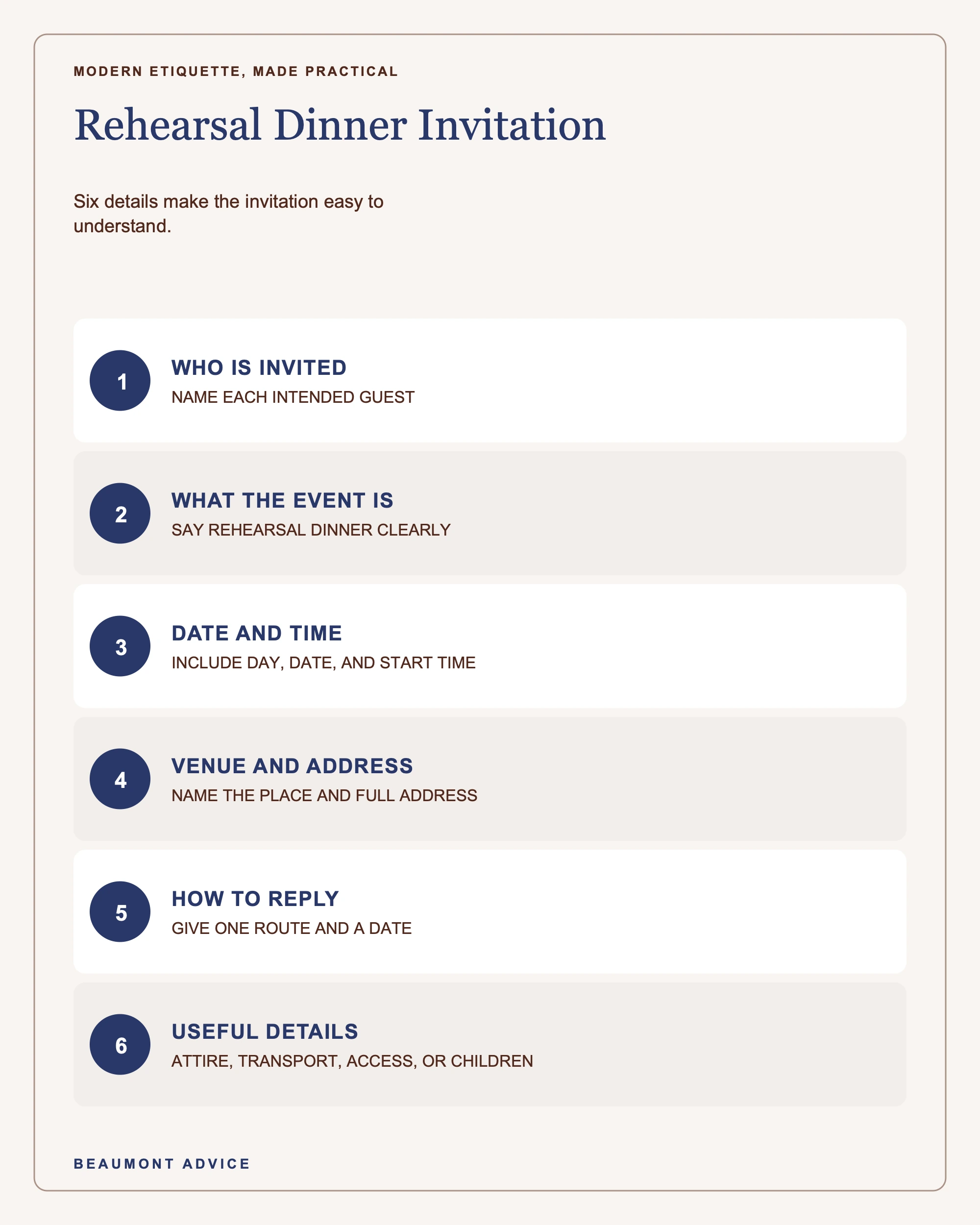
The rehearsal dinner invitation may be printed, emailed, or sent through an event platform. Match the form to the wedding weekend and the guests. The invitation should state:
- Who is invited.
- What the event is.
- The date and start time.
- The venue and full address.
- The host names when useful.
- Dress guidance if the setting is not obvious.
- How and when to reply.
- Transport, accessibility, or meal details guests need in advance.
Sample wording:
“Please join us for dinner after the wedding rehearsal in honor of Maya and Elise. Friday, September 25 at 7:00 p.m., Juniper House, 18 Garden Street. Hosted by the Rahman and Cole families. Kindly reply through the link below.”
For a casual plan:
“After the rehearsal, join us for tacos and a toast to Ben and Luis. Friday at 6:30 p.m. in the courtyard at Casa Verde. Come as you are from rehearsal. Please reply by September 10.”
Avoid vague wording such as “wedding festivities begin Friday” when only certain guests are invited. Clarity protects people from an awkward assumption.
Plan a pace that serves the wedding weekend
Allow enough time between the ceremony rehearsal and dinner for travel, parking, freshening up, and any venue transition. Give one person responsibility for telling the restaurant or host when the rehearsal is ending. A slightly flexible start can help. Guests should still receive a stated time.
The meal does not need a dense program. A simple sequence works well:
- Welcome and drinks.
- Seating and a short host greeting.
- Meal service.
- A limited group of planned toasts.
- Practical wedding-day notes, if needed.
- A warm close at a reasonable hour.

Share dietary and accessibility requests with the venue in advance. Seat people according to comfort and conversation, not rank. Place those who need quieter surroundings, step-free access, or a clear view where they can take part easily.
If alcohol is served, include appealing nonalcoholic choices and do not draw attention to what anyone orders. Arrange transport information when guests may be unfamiliar with the area.
Make room for thanks, toasts, and varied families
The rehearsal dinner often carries more personal remarks than the reception because the group is smaller. That warmth still benefits from planning. Ask speakers ahead of time and suggest a short length. An open microphone can create pressure, repetition, or stories that do not belong in public.
A host welcome might say:
“Thank you for being here and for the many ways you have supported Noor and Adrian. Tonight is a chance to enjoy one another’s company before tomorrow’s celebration. Please relax, eat well, and know how happy we are to welcome you.”
Couples may thank hosts, families, wedding-party members, and anyone who traveled or helped. No speech should require one person to describe a family relationship they do not claim. Use names and chosen relationship terms.
Keep private history private. Avoid former partners, family conflict, sexual jokes, financial comments, pregnancy speculation, or stories that embarrass the couple. If a speaker begins to drift, the host can step in kindly:
“Thank you, Daniel. Let’s raise our glasses to the couple.”
Cultural and faith traditions may guide blessings, seating, food, alcohol, music, or speaking order. Ask the people whose traditions are being represented. Explain unfamiliar moments briefly to guests, without turning a living practice into entertainment.
Be a gracious guest
Reply by the requested date and for every named person. Tell the host about dietary or access needs early, using practical language. Arrive as instructed, and do not bring an uninvited companion.
Follow the stated dress guidance. If none is given, use the venue, time, and wedding website as clues, then ask one clear question:
“I want to dress appropriately for Friday. Would polished casual clothing suit the restaurant?”

Unless the invitation says otherwise, wedding gifts usually follow the wedding plan and stay separate from the rehearsal dinner. A small host gift is optional. The most important guest contribution is calm participation.
Keep conversations inclusive. Introduce yourself to people you do not know, avoid taking over the couple’s limited time, and respect an early ending. If you are speaking, prepare your toast and keep it kind, brief, and suitable for every generation present.
Thank the host before leaving and send a message afterward. Mention something specific, such as the welcome, meal, or chance to meet the family.
Frequently asked questions
Who pays for the rehearsal dinner?
Any willing person or group may host. Family traditions differ, and couples may host themselves. Agree on scope, decision rights, and spending privately before making commitments.
Does everyone invited to the wedding attend?
No. The dinner may be limited to rehearsal participants and close family, or it may form part of a wider welcome event. Invite the selected guests directly and describe each event clearly.
Can children attend?
Yes, when they are named or the invitation includes them. Children in the ceremony may need to attend the rehearsal. Confirm their dinner participation separately. Hosts can offer an early meal or caregiver plan if suited.
Are speeches required?
No. A brief welcome and thanks may be enough. If toasts are planned, choose speakers ahead of time and protect the group from surprise pressure.
A rehearsal dinner succeeds when it supports the people and the wedding day ahead. Set a clear purpose, invite with care, keep the program light, and let gratitude guide the evening.
Get private guidance shaped around your event
Beaumont’s Social Etiquette Private Course offers one-to-one instruction for events, relationships, hosting, conversation, and social confidence. View the Social Etiquette Private Course.
