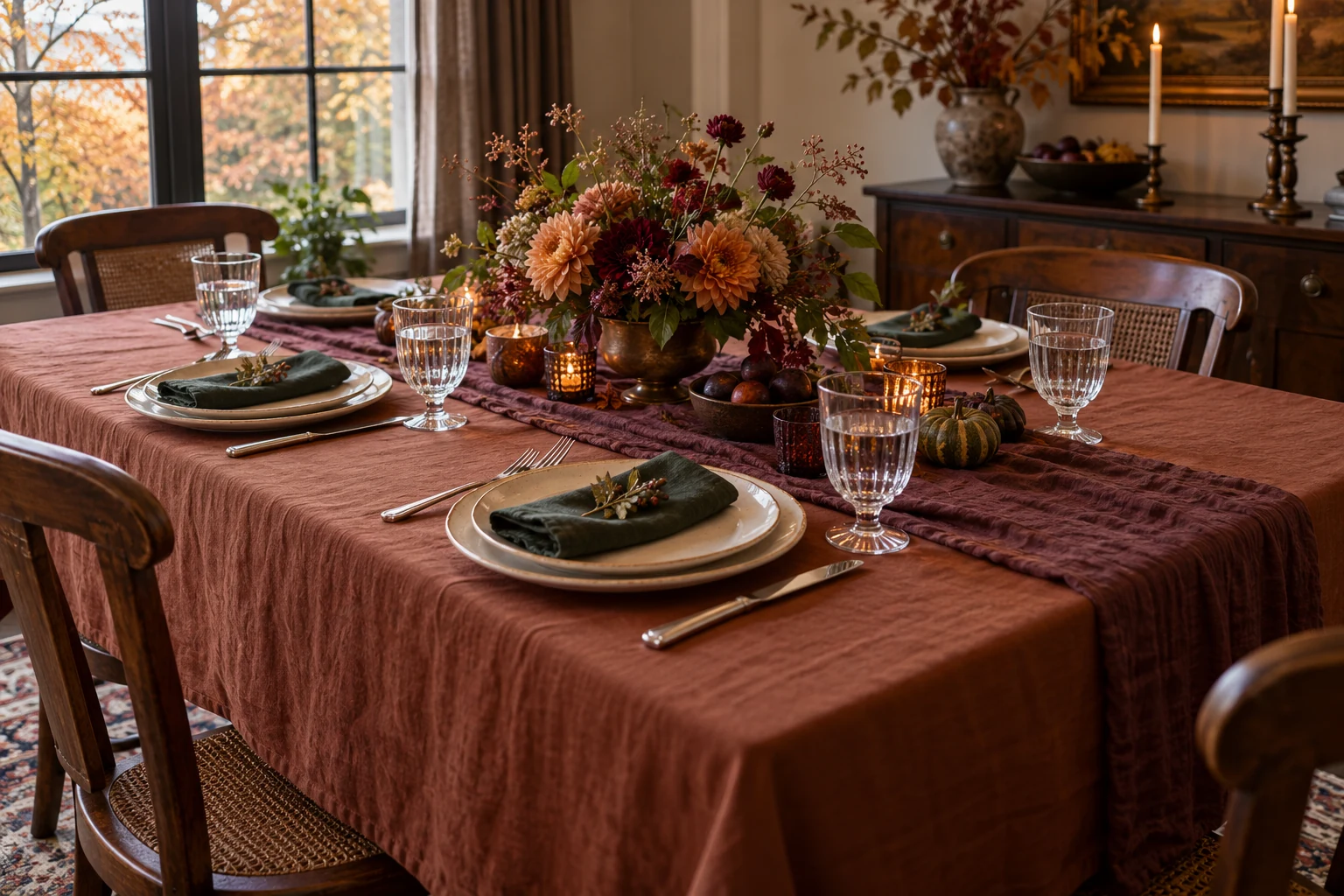
The proper way to set a table begins with a practical question: what will everyone need to eat this meal? A relaxed supper may require one fork, one knife and a water glass. A dinner with several courses needs a little more planning, but it follows the same idea.
In a conventional Western place setting, forks sit to the left of the plate, knives and spoons to the right, and drinks above the knives. Add pieces for the menu, rather than filling every available space. These arrangements are useful guides, not a reason to make anyone uncomfortable.
Read the formal place-setting map
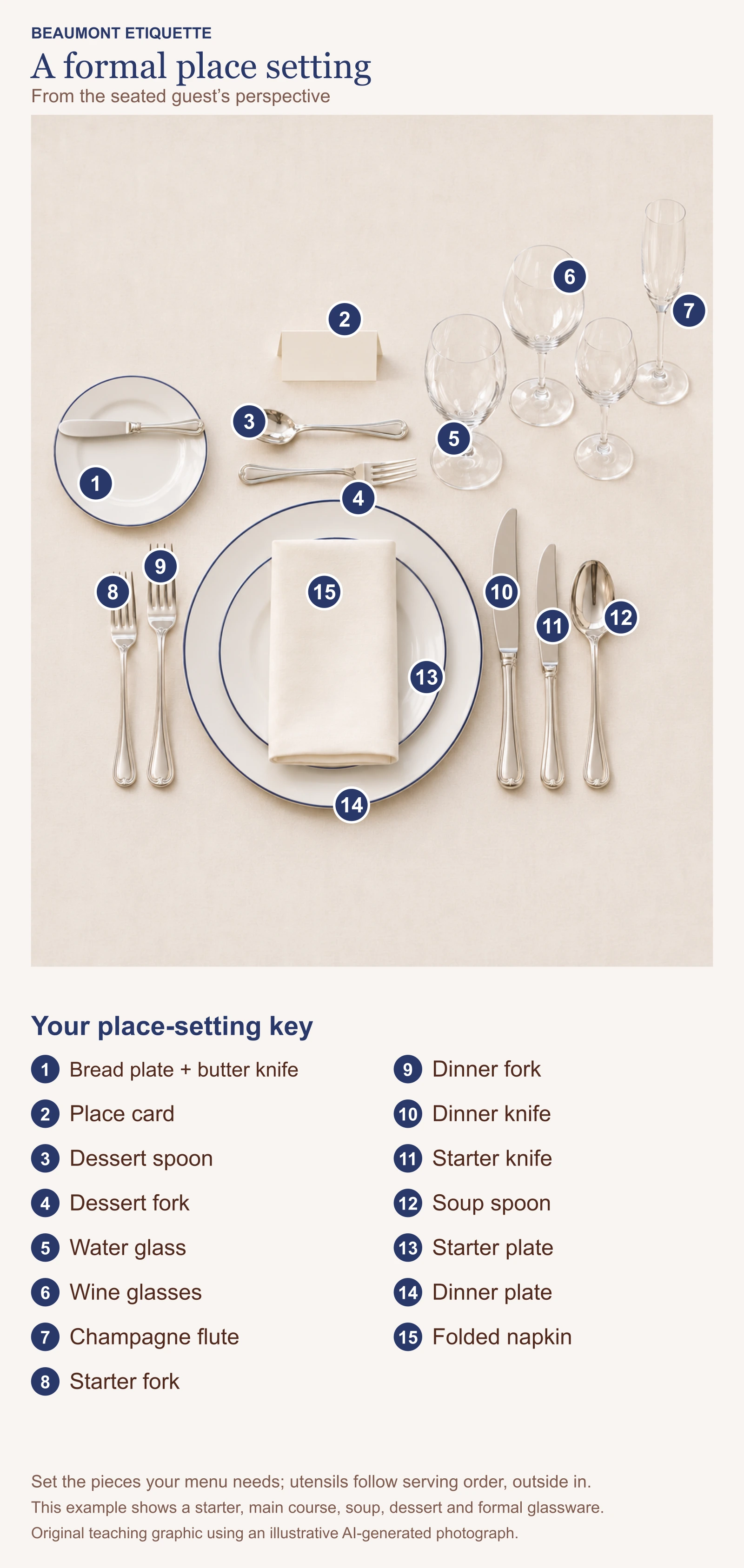
The labelled example shows a more complete setting, rather than the minimum needed for an everyday meal. Read the arrangement from the seated guest's position. The starter plate sits on the dinner plate, with the folded napkin on top. Starter and dinner forks are to the left; the dinner knife is nearest the plate on the right, followed by the starter knife and, when soup comes first, the soup spoon.
The bread plate and butter knife sit above the forks. The water glass is above the dinner knife, with the wine glasses to its right and the champagne flute farther right. This is an example of formal glassware, not a requirement to serve every drink shown. Choose the glasses for your actual drinks service and give alcohol-free options equal care.
If you set dessert cutlery in advance, the dessert fork lies horizontally above the plate, handle to the left, with the spoon above it and its handle to the right. Put the place card farther above the plate where the guest can read it. Dessert pieces can instead arrive with dessert if you prefer a clearer table. Match the arrangement to your menu and service order.
Choose the setting that fits the meal
For an everyday meal, center a plate in front of each chair. Put the fork on the left and the knife on the right, with its cutting edge turned toward the plate. Place a water glass above the knife. A napkin can sit to the left of the fork or on the plate.
That is enough for many meals. If nobody will use a spoon, leave it in the drawer. If the food is served in bowls, choose the bowl and utensils that make eating it easy. The menu should lead the arrangement.
For a more formal dinner, add a utensil for each planned course and arrange them in the order they will be used. This is where the familiar outside-in convention becomes helpful. Guests start with the outermost pieces and move toward the plate as the meal progresses.
Add courses in serving order
Suppose you will serve soup, then a main course, then dessert. Place the main-course fork on the left and its knife on the right. The soup spoon goes outside the knife, because soup comes first. Dessert utensils can arrive with dessert, which keeps the initial setting simpler.
If a salad is the first course, its fork sits outside the dinner fork. If salad is served after the main course, the arrangement changes to reflect that order. “Salad fork always outside” is not a reliable rule without knowing the menu.
A fish course may require its own suitable utensils. Do not add them merely to make a setting look formal. For a complicated meal, discuss the sequence with your caterer or service team rather than creating a row of pieces that nobody will need.
Keep handles aligned near the lower edge of the setting. Give people space to lift a utensil without touching their neighbor's. An attractive table should still be comfortable to use.
Place bread and drinks clearly
When using a separate bread plate, put it above the forks, to the upper left of the dinner plate. Place the butter knife horizontally across the top of the bread plate, with its cutting edge facing down toward the plate. Bread is an accompaniment, so its plate does not join the outside-in sequence of course utensils.
The water glass belongs to the upper right, above the dinner knife. Add only the other glasses needed for your drinks service. Their exact grouping can vary with the menu and available space. Make sure each glass is easy to reach and distinguish from the next guest's.
Do not set a wine glass for someone simply because everyone else has one. A thoughtful alcohol-free option belongs at the table without explanation or attention. Guests should not have to disclose why they are choosing it.
Treat decorative pieces as optional
A charger can frame a formal setting, but it is not essential equipment for dinner. It is a decorative service plate, not the plate from which guests eat. If you use chargers, agree with the service team when they will be removed; remove them before dessert.
Napkin rings, layered linens and elaborate folds are also optional. A neatly folded napkin is enough. Avoid decorating with anything that makes a guest uncertain about where to put their hands or how to begin.
Keep flowers and other centerpieces low enough for conversation, or otherwise positioned so they do not block sightlines. Leave room for serving dishes if the meal is family-style. Strong fragrance from flowers or candles can compete with the food and be uncomfortable for some guests.
Use place cards when they make seating easier
Place cards can help at a formal dinner, a gathering where guests do not know one another, or a table with particular seating needs. Write names clearly and check spelling before everyone arrives. A host can have a place card too; the useful aim is to make the seating plan understandable.
Consider hearing, mobility, conversation and access to the room when arranging seats. Ask privately if a guest has a preference or needs more space. Avoid treating a partner, caregiver or mobility aid as a complication to hide at the end of the table.
At a small, familiar gathering, you can simply welcome people to their seats. There is no need to add a formal system where a clear invitation works well.
Make the table usable for everyone
Sit in each position before guests arrive. Can a person move their chair, reach a glass and use their cutlery without catching the tablecloth? Is there enough room for the serving dishes? Can someone using a wheelchair approach a suitable place comfortably?
Adapt the equipment when needed. A stable glass, easier-to-hold utensil or different chair may make the meal more enjoyable. Ask the person rather than guessing what will help. A conventional setting can be adjusted quietly without making the guest's needs a topic for the room.
For children, choose manageable glasses and utensils and remove unnecessary pieces. Explain the setting briefly before the meal if that is useful. Learning works better with calm practice than a correction delivered in front of everyone.
If you are the guest
Pause before picking up a glass when the table is crowded. Bread generally belongs to your left and drinks to your right in this style of setting. If you are still unsure, ask quietly. A simple “Is this my water?” is much easier to receive than watching two people avoid the same glass all evening.
If you use the wrong utensil, continue calmly. Do not announce the mistake or rearrange someone else's setting. If you are hosting and notice confusion, offer help without identifying the person who needs it: “We'll use the outer spoon for the soup.”
A final check before welcoming guests
Look at the complete table from the doorway, then from a seated guest's position. Replace a marked glass, move a candle that blocks a face, and clear anything that does not serve the meal. Set shared items where they can be passed safely.
For a seasonal gathering, use the Thanksgiving table guide alongside this everyday reference. For guided practice in dining and entertaining, explore The Finishing Program by Myka Meier.
The best setting helps your guests stop thinking about the setting. Once everyone can sit, eat and talk comfortably, you have done the important part.