

A shared meal works beautifully when everyone understands the plan, brings something manageable, and leaves a little room for generosity.
You have been invited to a potluck, and the message says, “Bring whatever you like.” That sounds wonderfully easy until you start wondering how much food to make, whether the oven will be available, and if everyone else is bringing dessert.
Good potluck etiquette begins before the dish reaches the table. Confirm your contribution, explain anything it needs, and arrive ready to share. Hosts can make that possible with a little direction. Guests can make it pleasant by treating their contribution as part of a meal, rather than a personal performance.
Whether you are planning a neighborhood lunch, an autumn supper, or a gathering of friends, the aim is simple: distribute the work without handing one person a kitchen full of surprises.
Make the invitation clear about sharing the meal
A potluck should be described as a potluck when people are invited. A guest who accepts a dinner invitation should not discover the day before that they are responsible for the main course.
Hosts can name the format and give people a useful choice:
“We are having a potluck supper on Saturday at six. I will make the main dish. Would you enjoy bringing a vegetable side, bread, or dessert?”
Give the guest count, approximate mealtime, and any practical limits. You might explain that the oven will be occupied or that the meal is outdoors. Ask privately about food needs early enough to plan, without making anyone justify them to the whole group.
Contributions can vary. A friend who enjoys cooking may offer a substantial dish. Someone coming directly from work may bring bread, fruit, or drinks. A guest with limited funds or energy might help set the table. The invitation should leave people comfortable saying what is manageable.
If you need a specific contribution to make the meal work, ask for it plainly before someone accepts. Avoid quietly building a full menu around an offer they never made.
Choose a category, then agree on a quantity
“What should I bring?” is a good question. An even more helpful version includes a suggestion:
“I could bring a roasted vegetable salad or a lemon cake. Which would be more useful?”
When the host confirms, let them know roughly how much you will bring. At a meal with several shared dishes, every guest usually does not need to prepare a full meal for everyone. The host can judge quantities across the whole menu. A side for eight may be exactly right for twelve people when several other sides are coming.
Do not substitute something entirely different without a quick message. Changing from a main dish to cookies can leave a real gap. Equally, hosts should resist directing every ingredient or technique after accepting an offer. Agree on the category and any genuine needs, then let the contributor make it their own.
A shared list can prevent duplication. Keep it simple: person, dish, approximate quantity, and any equipment needed. There is no need to rank dishes, compare spending, or turn participation into a contest.
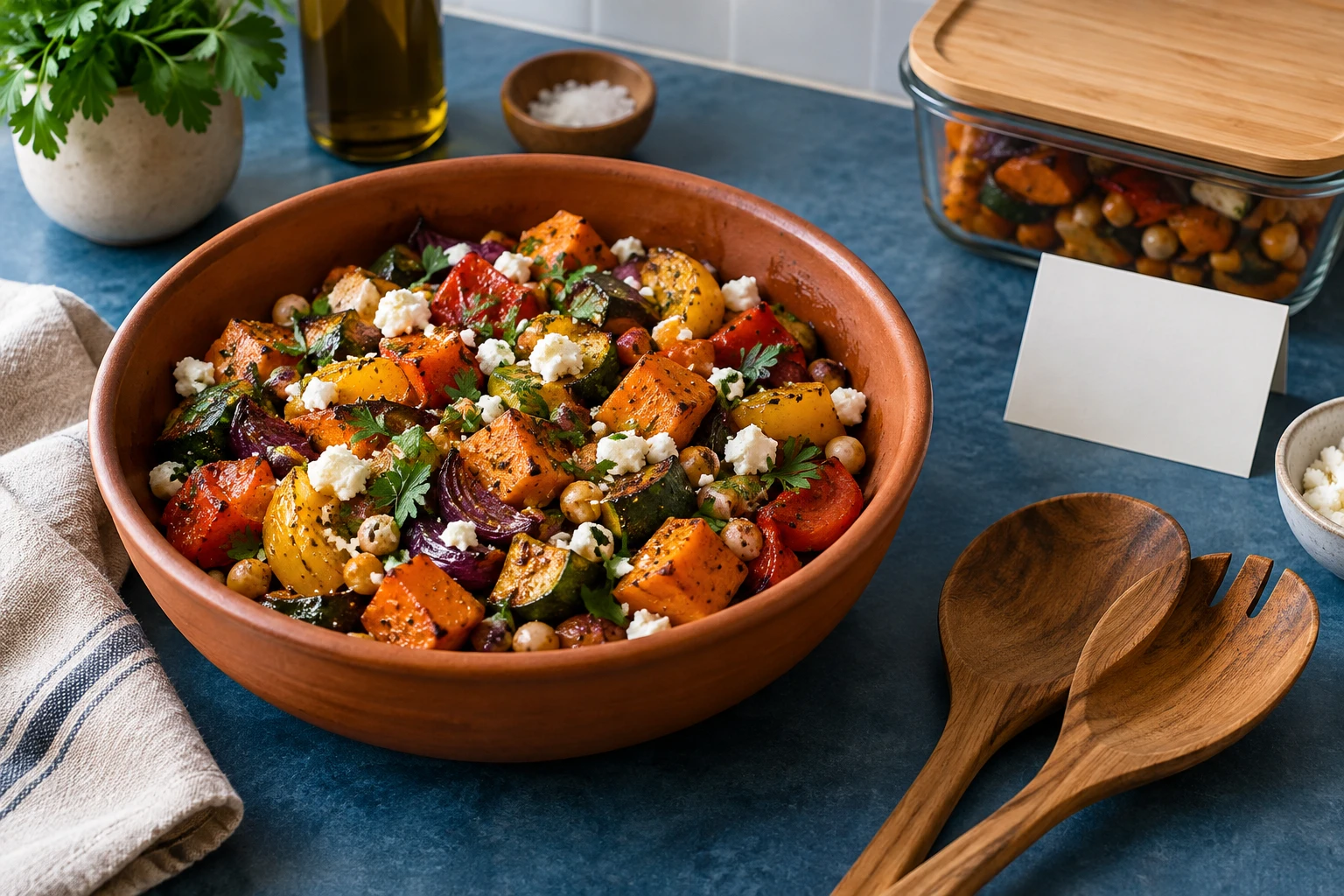
Bring the dish ready for the situation
Before choosing a recipe, think about the journey and the host’s kitchen. A dish that needs the oven, three burners, a blender, and thirty minutes of attention is a cooking project. It may be welcome, but it requires agreement.
Ask specifically:
“This needs ten minutes in the oven just before serving. Would that fit your plan? I can bring something that is ready to serve instead.”
Bring the serving spoon, tongs, or knife the dish needs. Choose a container that travels securely and can sit on the table appropriately. If you bring a favorite dish that you want returned, discreetly label the underside and arrange how it will get home.
Store-bought food is entirely welcome at a shared meal unless the event has a clearly stated cooking theme. A thoughtfully chosen loaf or prepared salad can be more useful than an ambitious dish that arrives unfinished. You can tell the host where it came from without presenting an excuse.
If transport or food storage is uncertain, check suitable food safety guidance before you travel. Etiquette does not require leaving perishable food out for the sake of appearances or serving something you are unsure about.
Discuss ingredients without making promises you cannot keep
Ingredient information helps people make their own choices. Bring a clear ingredient list or retain the packaging for a prepared item. Place information near the dish or make it easy for the host to find.
There is an important difference between knowing a recipe and guaranteeing that food is safe for someone with an allergy. A home kitchen may have shared equipment and ingredients. State what you know and what you cannot confirm:
“The recipe does not contain peanuts, but I use peanuts in my kitchen and cannot promise there has been no contact.”
Guests with dietary requirements can contact the host privately. It may be useful to offer a dish they can eat, but nobody should assume that this removes the host’s responsibility to have a clear conversation. Avoid urging someone to try “just a bite,” asking personal medical questions at the table, or interpreting a declined serving as criticism.
Separate serving utensils help everyone keep dishes as intended. If utensils become mixed, tell the host rather than quietly moving them back and assuming the issue has disappeared.
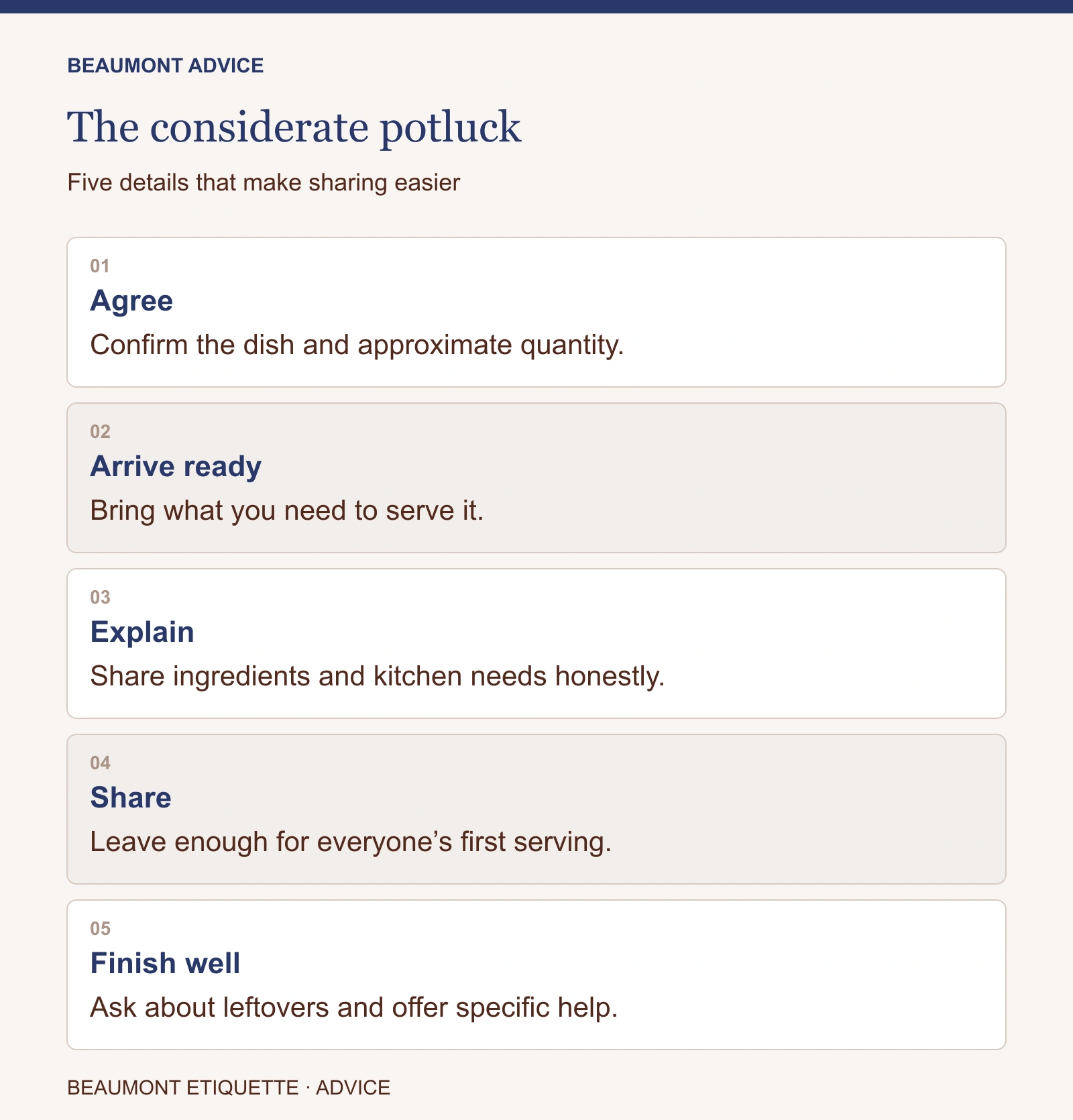
Arrive at the agreed time and make a calm handoff
At a potluck, arrival affects the menu. A late appetizer may arrive after the main meal, and a delayed main dish can keep everyone waiting. Follow the host’s arrival instructions and send a realistic update if you are running behind.
On arrival, ask where to put your contribution. Give the host the information they need in a few sentences:
“Here is the vegetable tart. It is ready to serve, the ingredient card is beside it, and I brought a knife. Where would you like it?”
Then let the host return to welcoming people. Avoid taking over refrigerator space, rearranging counters, or opening cupboards without permission. If your dish needs attention, handle the agreed task yourself rather than leaving unexplained instructions with an already busy host.
If you forgot a serving utensil or spilled something on the way, say so promptly. Most small problems are easy to solve when the host knows about them before everyone sits down.
Share the table without keeping score
Take a modest first portion so others have a chance to try the dishes. You can return for more when everyone has been served. Encourage children with the same gentle approach, and help younger guests manage serving utensils when needed.
Compliment something you enjoyed specifically: the seasoning, the texture, or the effort someone made. Resist reviewing every dish aloud, announcing that your version is healthier, or quizzing people about what their contribution cost.
Guests may decline food for many reasons. A warm “Of course” allows them to move on without explanation. Hosts can model this ease by offering rather than pressing.
The conversation should include people who brought simple contributions as naturally as those who cooked for hours. Everyone accepted the same invitation to spend time together. The meal works best when nobody needs to defend their place at the table.

Ask about leftovers before packing them
Leftovers are not automatically a prize for the host or property to be distributed without checking. There may be plans for them, and some items may no longer be suitable to keep.
Guests can ask:
“Would you like to keep some of the tart, or would it be more helpful if I took it home?”
Hosts can offer rather than insist: “There is plenty left if anyone would enjoy taking some.” Keep spare containers available if you expect to share food. Do not fill a guest’s special serving dish with another person’s leftovers without asking.
If you need to leave while the meal is still underway, avoid removing a key dish without discussion. Transfer food to another container if that works for the host, or arrange to collect your dish later. Name an actual plan so it does not become another task they must chase.
Offer a useful final hand
“Can I clear these plates?” is easier to answer than a general offer of help. You might gather glasses, wipe a table, or help pack the agreed leftovers. Follow the host’s instructions about sorting waste and washing delicate items.
If help is declined, accept the answer. A guest should not reorganize someone’s kitchen as a surprise favor. Thank the host before leaving, even when everyone contributed food. They still offered the space, made the plan, and brought the group together.
A brief message afterward can recognize something specific: “Thank you for such a relaxed evening. It was lovely to meet your neighbors.” For more on thanking hosts, see our modern thank-you guide.
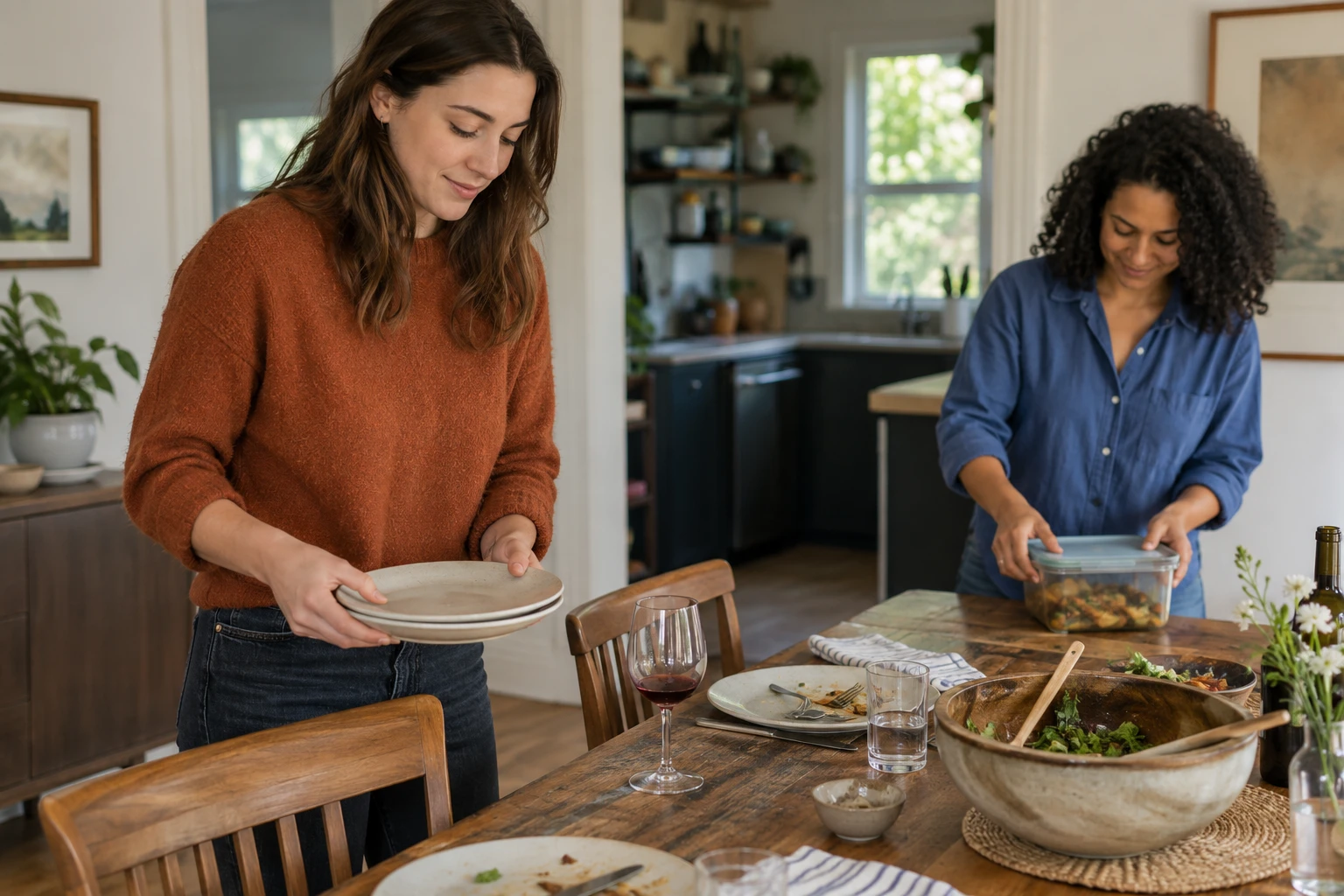
Feel comfortable at the shared table
The most memorable potlucks often have mismatched dishes and simple food. What makes them enjoyable is the ease with which people coordinate, share, and notice one another. Bring what you promised, stay flexible about the small things, and leave the host with less work than they expected.
For practical instruction in table manners and dining confidence, explore Beaumont’s Confident Dining course, taught by etiquette expert Myka Meier.
